









How to Fix a Prolapsed Bladder Without Surgery
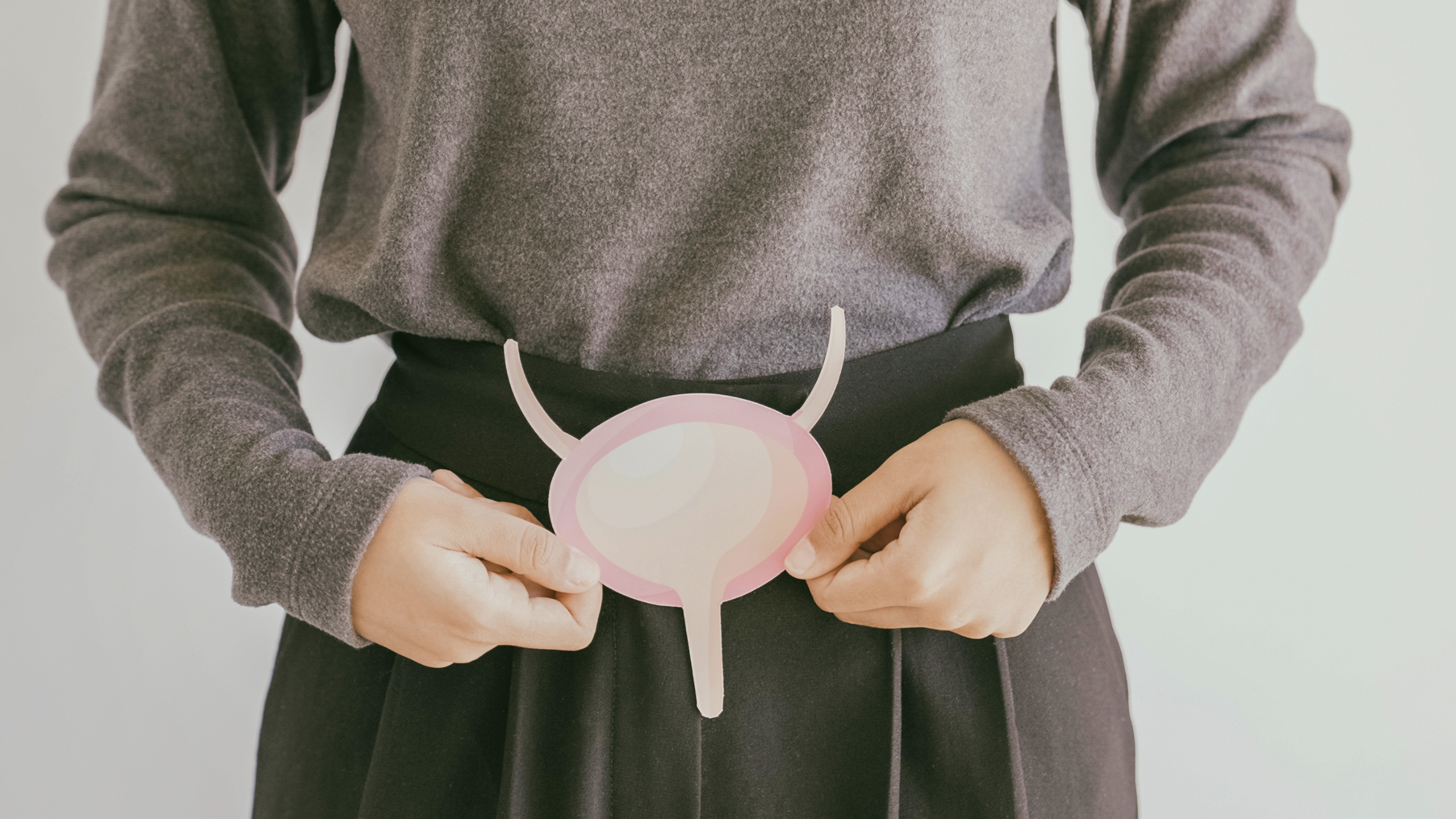
Table of Contents
A prolapsed bladder, medically called a cystocele, happens when the bladder drops from its normal position and presses into the vaginal wall. This occurs when the pelvic floor muscles and connective tissues that support the bladder become stretched or damaged.
While surgical repair can be necessary for severe prolapse, many women find success with non surgical treatments that restore strength and relieve symptoms naturally. With the right tools and methods, it is possible to rebuild the foundation that holds your bladder and pelvic organs in place.
This guide will walk you through how to fix a prolapsed bladder step by step, without going under the knife.
Understanding Pelvic Organ Prolapse
When we talk about a bladder prolapse, or cystocele, we’re referring to the phenomenon where the bladder descends from its normal anatomical resting place, pressing forward into the wall of the vagina, because the tissues that should support it have lost strength or alignment.
Some major studies estimate that about one in two women will show some grade of bladder descent when examined. At the global level, about 40 % of women may develop a pelvic organ prolapse over the course of their lives.
What leads to this weakening?
The usual suspects include the major life-events and internal stressors of the female body like vaginal childbirth (especially multiple births or instrument-assisted deliveries), chronic straining, the decline of estrogen at menopause, ageing itself, excess weight, and repetitive heavy lifting.
One large community-based study found that among women who had previously undergone hysterectomy, the prevalence of cystocele was approximately 32.9%. Anterior vaginal wall prolapse (which includes cystocele) accounts for the vast majority, around 81%, of all prolapse repairs.
The severity of the prolapse matters. In mild or moderate cases, the bladder may sag somewhat into the vagina, creating a tissue bulge but the bulge may not protrude visibly outside the vaginal opening. In these scenarios, non-surgical measures often have real potential to restore balance because the structural damage is limited and there remains functional muscle and tissue to work with.
By contrast, in more advanced or severe cases the descent becomes pronounced and the bladder may bulge outside the vaginal opening, or the prolapse may be so pronounced that urination or bowel function is obstructed. These severe presentations require surgical intervention for effective resolution.
Working With the Pelvic Space
The pelvic space is a small area with a big job. It houses the bladder, uterus, and bowel, and relies on a coordinated system of muscles, connective tissue, and breath pressure to keep everything in position. When those supports stretch, weaken, or lose communication with each other, the bladder can drop forward into the vaginal wall.
Improvement starts by changing the conditions in this space so the tissue can recover and the muscles can do their job again. That means working from both directions:
-
Externally, through posture, movement, and breath patterns that reduce the constant downward pressure on the pelvic floor.
-
Internally, through targeted activation, release, and improved circulation of the muscles and fascia that hold the bladder in place.
In pelvic-floor physical therapy a trained therapist can assess which muscles are out of sync, and use manual techniques and tailored exercises to rebuild coordination.
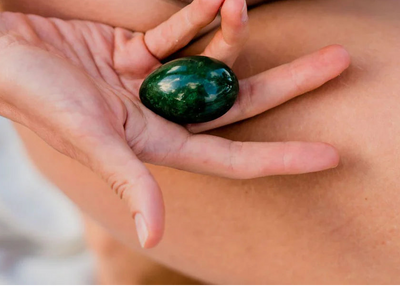
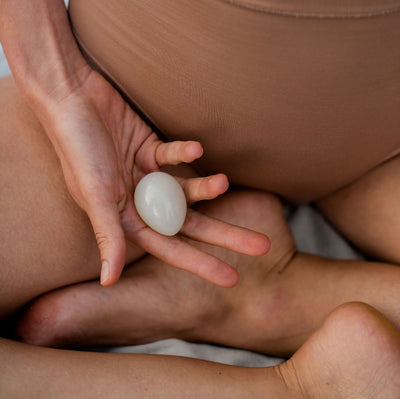
But meaningful progress can also happen through self-directed care. Learning to feel and engage your pelvic floor and even using gentle internal awareness tools, like yoni eggs create better conditions for healing.
In the sections below, we’ll look at the range of methods that help the pelvic space reorganize itself and regain strength.
Pelvic Floor Muscle Exercises
When the bladder sags into the vaginal wall, the web of muscles and connective tissue known as the levator ani and endopelvic fascia have lost their tone. Pelvic-floor stretches and exercises teach these fibers to shorten and lift again, as each contraction draws the bladder neck upward, re-creating the natural angle that keeps urine in and the pelvic organs supported.
Doing exercises where you are lying down when you get started at first removes the pull of gravity so the muscles can relearn the motion without strain. Progressing to sitting, standing, and light lifting gradually strengthens them under everyday loads.
As you exhale while contracting, the diaphragm rises and intra-abdominal pressure drops, preventing downward force on the bladder and vaginal walls. The repeated rhythm of lift and release stimulates collagen repair in the fascia and improves the coordination between your breath, deep abdominal muscles, and pelvic floor, the trio that keeps the bladder held comfortably in place.
Best Yoga Poses for Uterine Prolapse
-
Supported Bridge Pose
-
Reclined Bound Angle Pose (Supta Baddha Konasana)
-
Child’s Pose (Balasana)
-
Cat–Cow (Marjaryasana–Bitilasana)
-
Supported Deep Squat (Malasana with props)
-
Knees-to-Chest (Apanasana)
-
Side-Lying Leg Lifts
-
Legs Up the Wall (Viparita Karani)
-
Diaphragmatic Belly Breathing
-
Modified Warrior II (Virabhadrasana II)
-
Happy Baby (Ananda Balasana)
Kegel Exercises
Slow holds through kegel exercises recruit the type-I muscle fibers that provide long-term support to the bladder and quick squeezes train the type-II fibers that react instantly when you cough, sneeze, or laugh. This dual training restores the pelvic floor’s ability to respond dynamically to everyday pressure changes.
Holding the contraction without tightening the thighs or buttocks isolates the pelvic sling so surrounding muscles don’t steal the work. Over weeks, the tissue thickens and circulation improves, helping the vaginal wall regain firmness and elasticity which as a key to preventing the bladder from pushing forward again. Practiced consistently, Kegels can lessen that feeling of pelvic heaviness and reduce urine leakage because the muscles are once again able to “catch” the bladder before it descends.
Using Yoni Eggs Safely with Prolapse
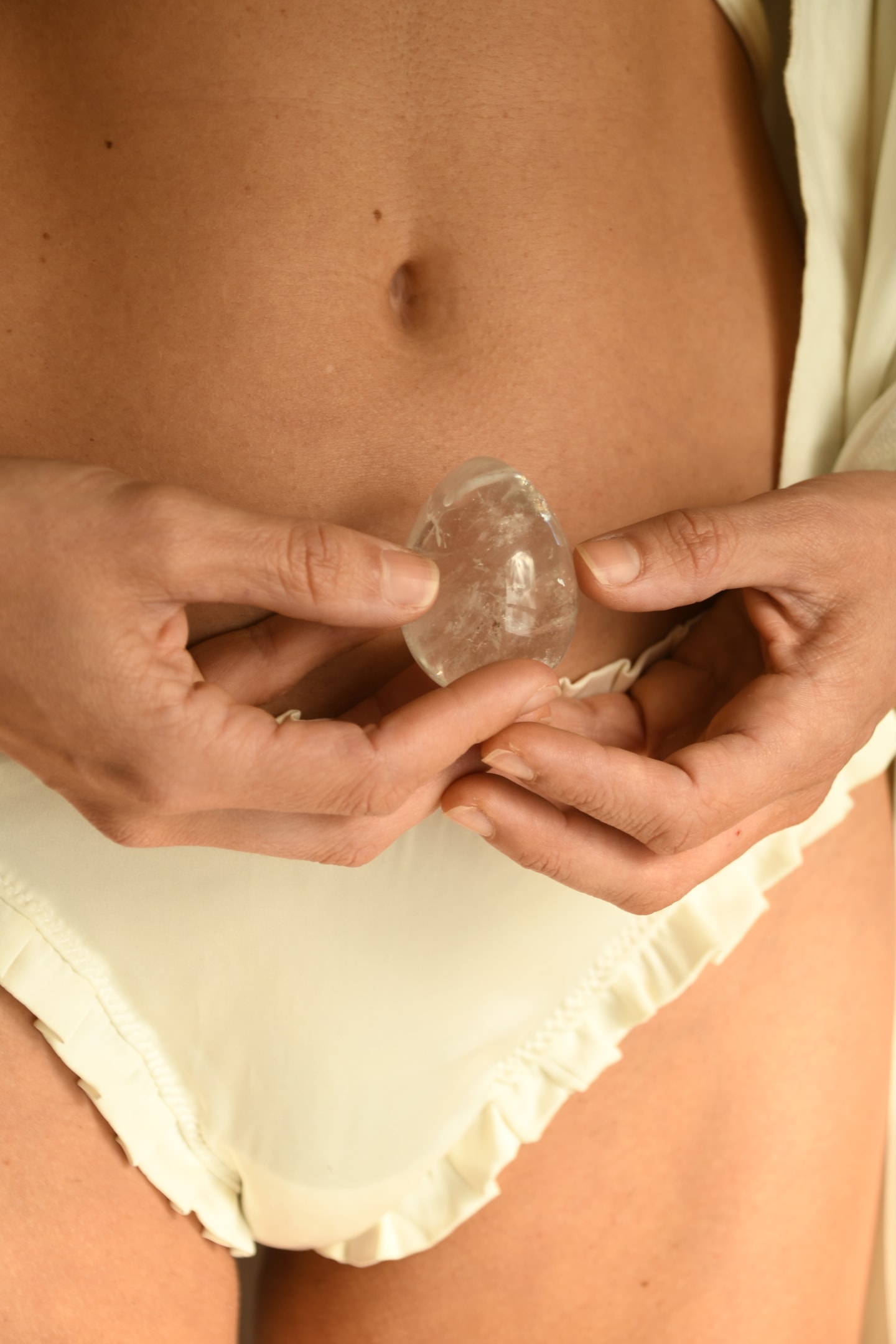
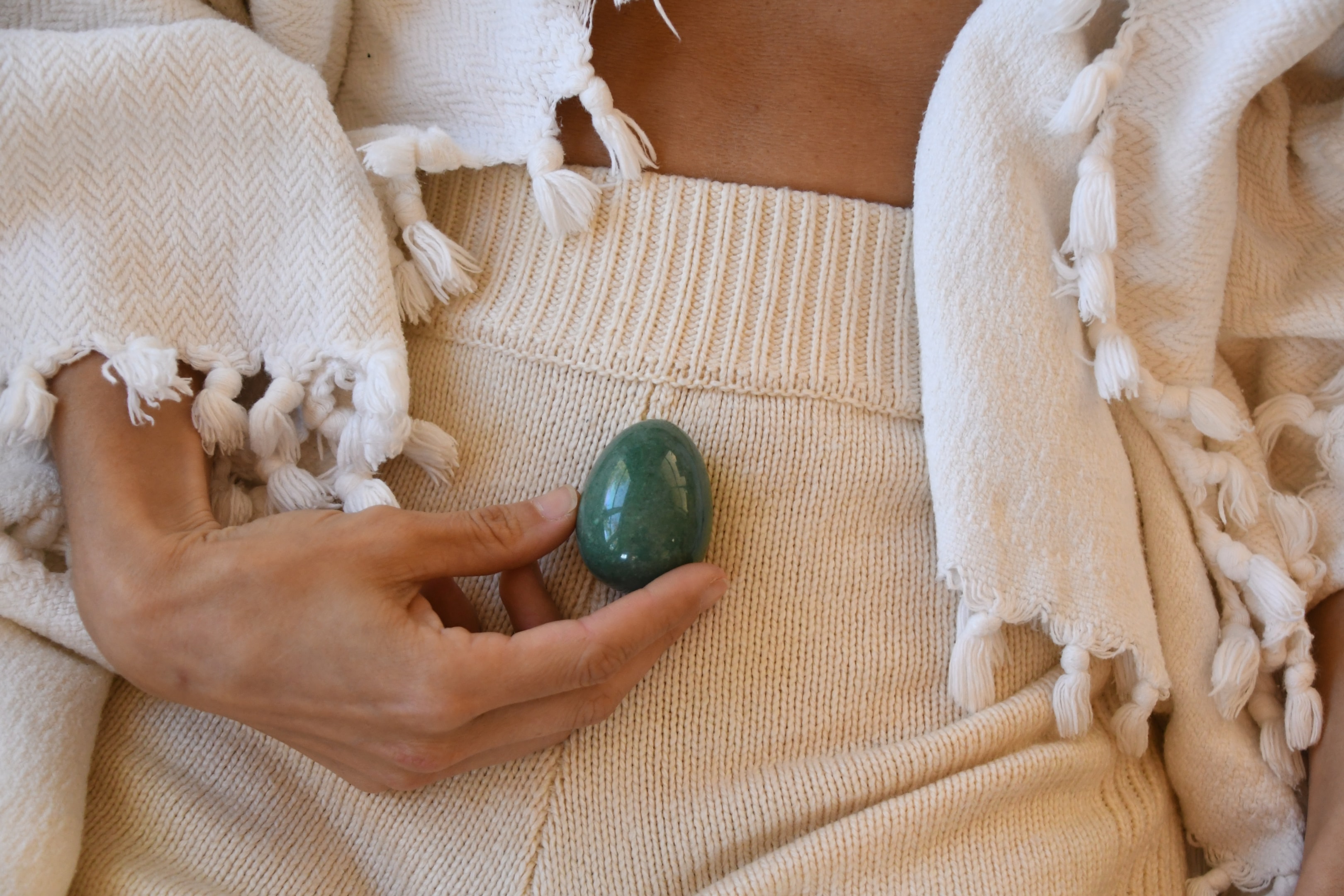
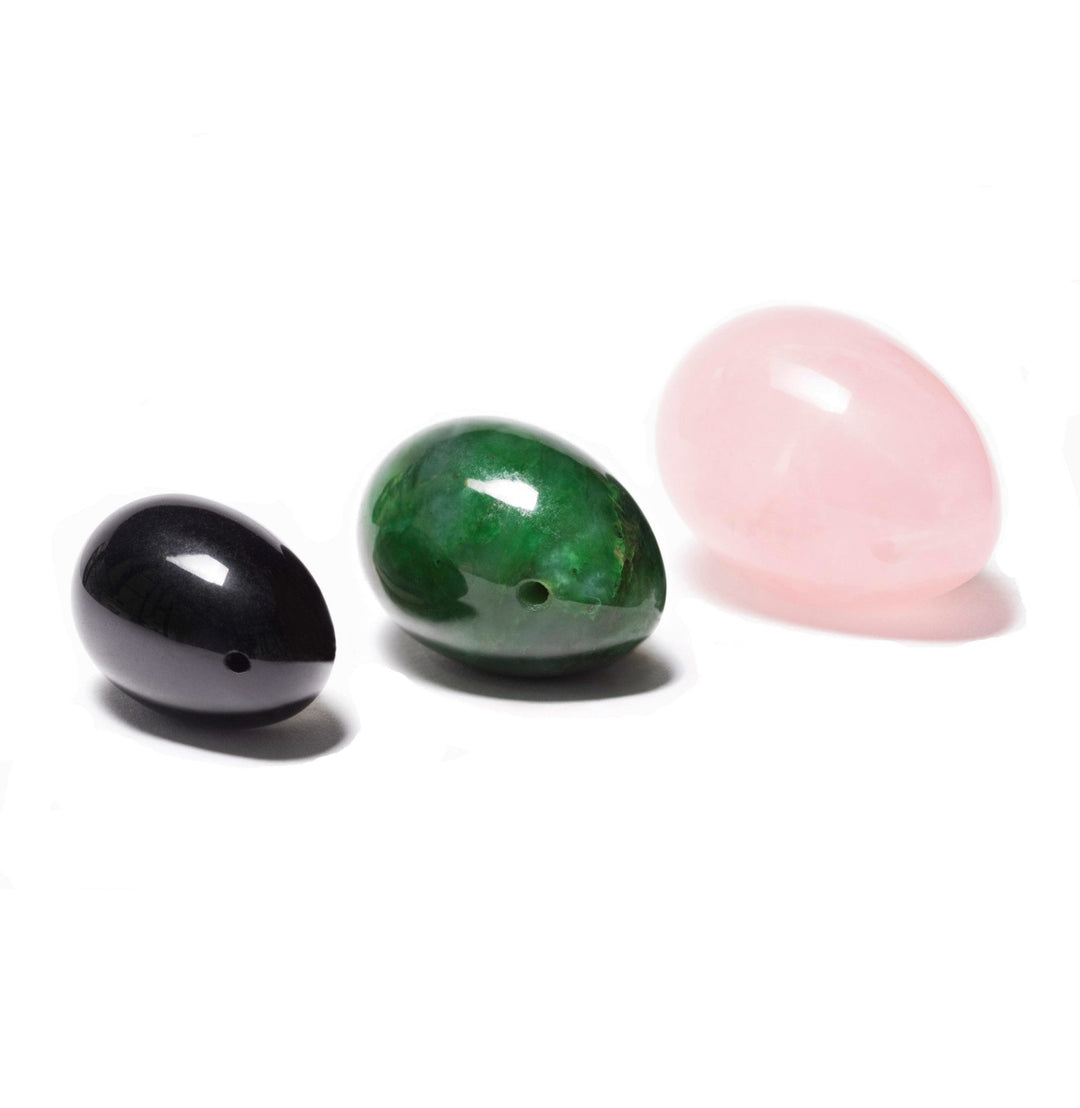
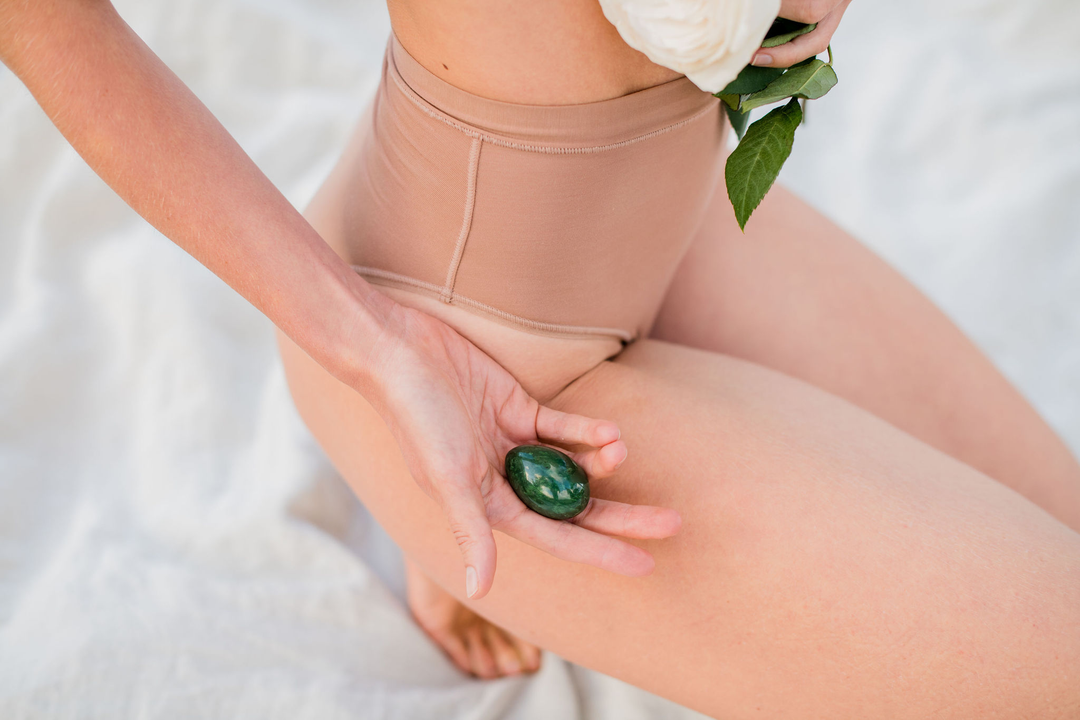
When a prolapse is mild or moderate, part of the difficulty is that the sensory connection between brain and pelvic floor has dulled. The muscles don’t respond quickly because the nervous system has lost the map. A smooth, medium-weight yoni egg can bring that awareness back.
The presence of the egg inside the vagina activates sensory receptors and encourages gentle muscular engagement. That renewed awareness increases local circulation and oxygenation, potentially enhanced by vaginal estrogen which in turn nourishes the fascia and muscle fibres that support the bladder. Used lying down, gravity’s pull is removed, so the pelvic floor can learn to contract and release without additional strain. Over time, this sensory retraining helps the bladder sit higher and feel more supported.
Important Notes for Egg Use During Prolapse:
-
Use only if the prolapse is mild or moderate and no tissue is bulging outside the vagina.
-
Avoid during severe prolapse, infection, pain, or the first 12 weeks after birth.
-
Wash thoroughly and apply natural lubricant.
-
Insert while lying down to minimize pressure.
-
Practice gentle squeezes and releases for 5–10 minutes.
-
Remove and wash after each session, then rest.
-
Limit to two or three sessions weekly, stopping if you feel pressure or heaviness.
Crystal Wands for Pelvic Release
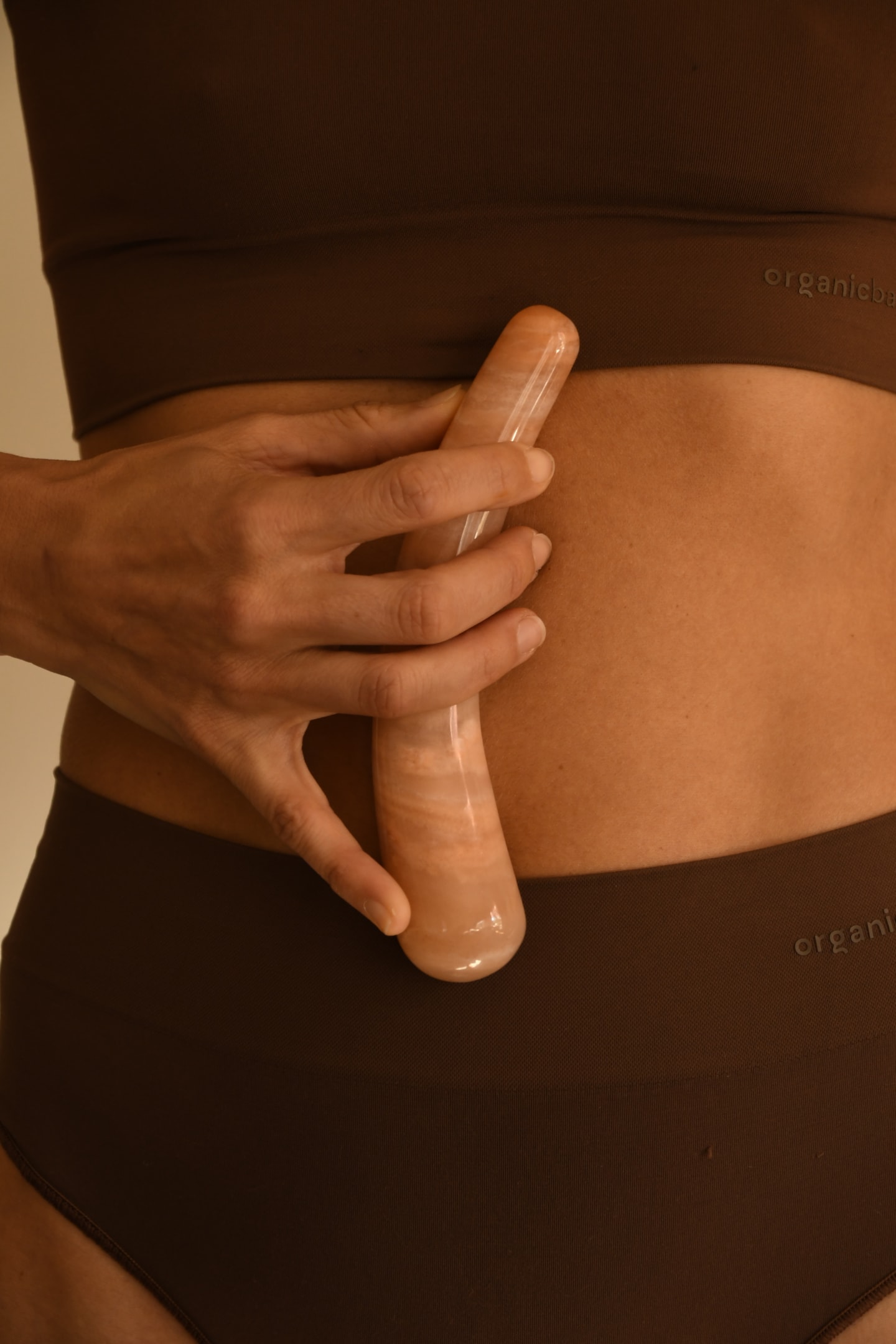
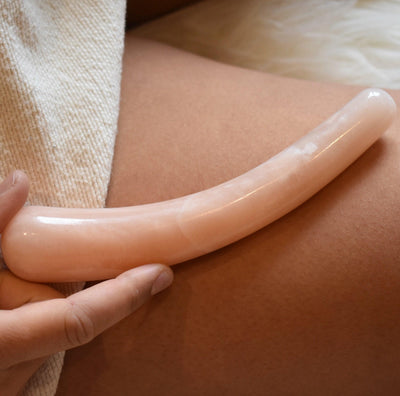
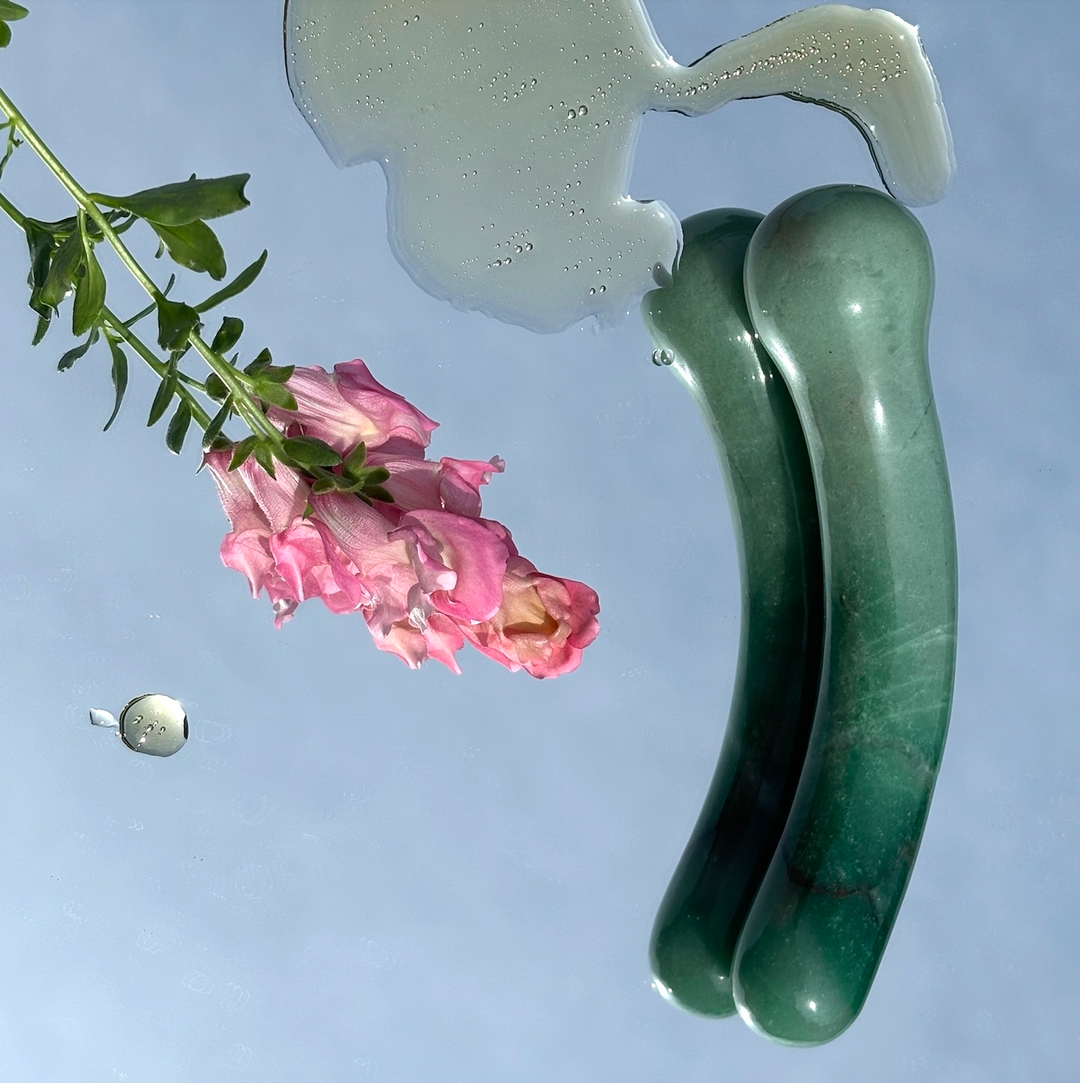
Many women with prolapse carry hidden tension in the pelvic floor. Constant gripping restricts blood flow and can actually pull the bladder downward. Crystal wands are very effective for overly tight pelvic floors, as they allow the tissue to release this over-activity safely. By pressing lightly into tender points, the pressure activates a reflex that tells the muscle to relax.
When those tight fibres let go, the entire bowl of support in the pelvic area evens out and are no longer rigid in some areas and lax in others. Balanced tone means the bladder rests in a more neutral, lifted position instead of being tugged forward by tense and shortened tissue.
Important Notes For Wand Use During Prolapse:
-
Avoid use if tissue is protruding outside the vagina, or if there is infection or pain with insertion.
-
Apply lubricant, lie down, and insert slowly.
-
Rest the tip against tight or tender areas for 10–20 seconds as you exhale and feel the tissue soften.
-
Limit sessions to about ten minutes, two or three times per week.
-
Alternate wand-release days with egg strengthening days to keep the system in balance.
Vaginal Pessary as a Medical Option
A vaginal pessary is a soft silicone device that’s placed inside the vagina to physically support the bladder and vaginal walls, helping restore their natural position. A pessary is most helpful in mild to moderate prolapse where the bladder has dropped but not completely protruded outside the vaginal opening.
In these cases, the pelvic tissues still have enough tone and integrity to respond to the mechanical lift the pessary provides. For severe prolapse where the bladder or vaginal wall stays outside the body surgery is often necessary, although a pessary can still offer temporary relief or be used if surgery isn’t an option.
By sitting behind the pubic bone and underneath the bladder base, the pessary restores the natural angle between the bladder, urethra, and vaginal wall. This prevents the bladder from folding downward and removes the constant pulling sensation on stretched fascia. With that downward pressure relieved, blood and lymph circulation improve, allowing the tissues to receive oxygen and nutrients they’ve been missing. It also gives the pelvic-floor muscles a break, so they can strengthen through exercise instead of constantly overcompensating to hold things up.
A pessary doesn’t “cure” or permanently reverse prolapse on its own, it supports the bladder while the underlying muscles and connective tissues are being retrained. Kind of like an internal brace: it holds the bladder in its proper place so that the practises and changes can work more effectively. When used consistently, it can slow or even halt the progression of prolapse and significantly reduce symptoms.
Daily Lifestyle Adjustments
1. Avoid Heavy Lifting or Change How You Lift
When you lift something heavy while holding your breath, your diaphragm locks downward. This instantly increases pressure inside your abdomen and forces the bladder to press forward into the vaginal wall. Exhaling during the lift pulls the diaphragm upward and spares the anterior vaginal fascia (the tissue directly responsible for holding the bladder back). This one change prevents those micro-stretches that worsen prolapse over time.
2. Prevent Constipation
Straining uses the exact same pressure pattern that creates prolapse in the first place. When you bear down, the pelvic floor is forced outward while the bowel pushes downward. This stretches the tissue that forms the bowl under your bladder. Hydration, fiber, magnesium, and a squatting position reduce the need to push, protecting the connective tissue that’s already trying to recover.
3. Reduce Bladder Irritants
When the bladder is irritated by caffeine, alcohol, carbonation, or acidic drinks, it contracts more often and more forcefully. Every contraction pushes the bladder neck downward. In prolapse, that area is already vulnerable. Removing irritants gives the bladder wall a calmer environment, thereby reducing discomfort and the sudden downward nudges that can worsen symptoms.
4. Maintain a Stable, Supportive Body Weight
Excess abdominal fat exerts constant downward pressure on the pelvic floor. Even when standing still, the pelvic muscles have to work harder to counter that load. Reducing weight reduces the baseline force pressing on the bladder and gives the levator ani muscles a chance to rebuild strength.
5. Support Vaginal Comfort During Sex
When penetration feels dry or sharp, the pelvic floor reflexively tenses. This tension limits the pelvic floor’s natural ability to lengthen and rebound, which directly affects bladder support. Supple, well-lubricated tissue allows the pelvic floor to move the way it’s designed to.
6. Give Your Organs a Gravity Break Each Day
When you lie on your back with your knees bent, the organs literally settle back into the pelvis. This position reduces the weight on the anterior vaginal wall, improves blood flow to the pelvic fascia, and lets the bladder drift upward from its sagging position. Even 3–5 minutes a day gives the support structures time to decompress and repair.
7. Try Free Bleeding Instead of Internal Products
Using tampons or menstrual cups adds upward pressure inside the vaginal canal. In a body already dealing with weakened support, that internal pressure can push outward on the compromised fascia and create more irritation or heaviness. Free bleeding removes that internal force and allows the vaginal walls and pelvic floor to stay relaxed and uncompressed during menstruation.
When to See a Doctor
1. The bulge is always visible outside the vagina
When the bladder or vaginal wall stays outside the body, the connective tissue that normally holds it in place is significantly overstretched. At this point, it’s difficult for the pelvic floor muscles to generate enough lift on their own. A doctor can assess the degree of prolapse and discuss support options like a pessary or, in some cases, surgical repair.
2. You can’t fully empty your bladder or bowels
Incomplete emptying suggests that the prolapse is affecting the natural angle of the urethra or rectum. This can create a kinked pathway where urine or stool gets trapped. Leaving this unaddressed can lead to further strain on the pelvic floor.
3. You’re getting repeated bladder infections
A prolapsed bladder can sit lower than usual, making it harder to empty completely. Residual urine becomes a warm environment for bacteria to grow. Frequent infections indicate that the bladder isn’t clearing properly, and medical guidance is needed to prevent long-term irritation or kidney involvement.
4. Pain or symptoms are worsening despite your efforts
If symptoms keep progressing even with strengthening and awareness practices, it may mean that the supportive fascia is too stretched or that another pelvic issue is overlapping with your prolapse. A doctor can evaluate whether additional support or targeted therapy is needed.
Conclusion
Improving a bladder prolapse without surgery comes down to consistency and a willingness to make changes and try new things. The body responds over time to daily habits that reduce strain on the pelvic floor.
What often surprises women is how much this process increases their awareness of the pelvic space. As you learn to feel what’s happening internally the area becomes more responsive. That awareness creates better conditions for healing.





Leave a comment