






Vaginal Atrophy Natural Treatment: What Actually Helps
Vaginal atrophy, clinically called genitourinary syndrome of menopause, happens when declining estrogen thins the vaginal walls. In turn, this reduces natural lubrication and decreases the elasticity of vaginal tissue. It affects a large share of women during and after menopause, and it can begin earlier for those who are breastfeeding, taking certain medications, or recovering from cancer treatment.
The standard clinical response treats the estrogen deficiency directly. Doctors prescribe vaginal estrogen creams, rings, and tablets, along with systemic hormone replacement therapy and non-hormonal prescriptions like ospemifene and prasterone. These treatments work, and for many women they are the right choice.
But clinical treatments also come with trade-offs. Hormone therapy carries contraindications for women, and some women simply prefer to avoid prescription hormones altogether. This is where natural approaches tend to be less invasive and support the body's own tissue health..
In this article, we walk through your natural options for treating vaginal atrophy, explaining what each one does and how it works in the body, so you can decide what fits your needs.
What Vaginal Atrophy Actually Is
Vaginal atrophy is what happens when estrogen production falls and the vaginal tissues respond. The walls thin, they produce less natural lubrication, they lose elasticity, and blood flow to the area decreases. Doctors now call it genitourinary syndrome of menopause, because the same drop in estrogen affects the urinary system too. The North American Menopause Society endorsed this new term in 2014, both to reflect the urinary involvement and to move away from the negative word "atrophy."
Lower estrogen thins and dries the tissue, which causes vaginal dryness and pain during intercourse. Reduced blood flow strips away the natural plumpness, responsiveness, and lubrication that healthy tissue depends on. And as the environment inside the vaginal canal shifts, the area becomes more prone to urinary tract infections and yeast infections. These symptoms show up in a fairly predictable order where dryness affects around 75% of postmenopausal women, pain during intercourse around 38%, and itching or irritation around 15%.
Two facts about this condition are worth understanding clearly.
First, it is very common. GSM affects more than half of postmenopausal women. Estimates vary with how it is measured, but one study found that 50% - 60% of women will experience it, with prevalence climbing in the years after menopause.
Second, most women stay quiet about it and miss the connection. In one international survey, 80% of women said vaginal symptoms hurt their quality of life, yet only 4% linked those symptoms to the loss of estrogen after menopause, and nearly half had no idea treatment options existed. Embarrassment keeps many women from raising it, so it stays underdiagnosed and undertreated.
Postmenopausal and menopausal women experience it most, but it also occurs after childbirth, during breastfeeding, and with certain medications, including those used in breast cancer treatment. And unlike hot flashes, which usually fade with time, GSM tends to be chronic and progressive, with symptoms unlikely to resolve on their own.
Read: How to Heal Vaginal Dryness & Boost Yoni Lubrication Naturally
Your Vagina Is Talking: Learn to Listen
Dryness, sensitivity, and vaginal discomfort are signals. When the tissue gets drier or more tender, your body is reporting a change in one of three things, which can be your estrogen levels, the blood flow reaching the area, or your stress. The symptom is the readout. Learning to read it is the first real skill of caring for this part of your body, because the same symptom can point to very different causes, and the cause determines what actually helps.
Take stress, since it is the one most women overlook. Lubrication and arousal run partly through your nervous system, which means the tissue responds to your mental state as directly as it responds to hormones. When you are under sustained stress, your body stays braced in fight-or-flight mode where blood vessels constrict, circulation gets routed toward your heart and muscles and away from the pelvis, and arousal and lubrication drop because the body reads the moment as the wrong time for either.
When you feel safe, rested, and turned on, the opposite happens, where blood vessels relax and open, the pelvis fills with blood, and the tissue plumps and self-lubricates in response. This is why two women with identical estrogen levels can have completely different symptoms, and why dryness sometimes clears up after a holiday rather than a prescription. So when something feels off, look past the tissue itself to the wider picture, such as how you are sleeping, how much pressure you are under, and how much pleasure or physical touch you actually get in a normal week. Each one shows up in the tissue.
Reading those signals depends on knowing your own baseline, and this is where most women are working blind. They have never established what healthy feels like for them specifically and they are not aware of their normal level of moisture day to day and how responsive they normally are during arousal. Without that reference point, a change has nothing to be measured against, so it either goes unnoticed for months or gets read as a catastrophe when it is something minor. A baseline fixes both problems. Once you know your normal, a shift away from it becomes obvious early, while it is still small and easy to address, and you can tell the difference between a passing dip and a real trend.
Keeping Things Juicy With Moisture and Lubrication
Moisture is what keeps vaginal tissue functional. Estrogen drives the tissue to hold water and stay thick, elastic, and self-lubricating. When estrogen falls, the tissue holds less water, thins, and produces less of its own lubrication. As estrogen drops, the vaginal skin loses collagen and water content and the tissue becomes dry and disturbed. Dry tissue tears more easily during friction and offers less of a barrier against bacteria and yeast, which is part of why dryness and recurrent infections tend to arrive together. Replacing that lost moisture from the outside makes daily life and sex comfortable again, and it physically protects the tissue from the damage that dryness causes.
The first thing to get straight is the difference between a moisturizer and a lubricant, because they solve different problems and most women need both. Both combat vaginal dryness, but they work differently, where moisturizers are absorbed into the vaginal tissue, while lubricants stay on the surface.
Read: Vaginal Wellness: Tips, Nutrition, Care & What's Normal
Vaginal Moisturizers
A vaginal moisturizer is used on a schedule, typically every two to three days, whether or not you plan to have sex. Like a skin moisturizer, it gets absorbed and traps moisture within the tissue. The point is to raise and maintain your everyday baseline level of moisture, and the payoff shows up in the tissue itself. one study found that using a vaginal moisturizer after menopause greatly improved the elasticity and suppleness of vaginal tissue, and the consensus is that consistency is what makes it work.
A good non-hormonal moisturizer can hold its own against prescription estrogen. In a randomized trial, a hormone-free moisturizing cream improved vaginal dryness at least as well as a 0.1% estriol cream, while also relieving painful sex and daily-life impairment, supporting its use as a first choice for mild to moderate symptoms. This is the heart of why we reach for natural moisturizers before clinical hormonal options. They deliver real, measurable results on the same symptoms and they carry fewer of the contraindications that rule estrogen out for many women.
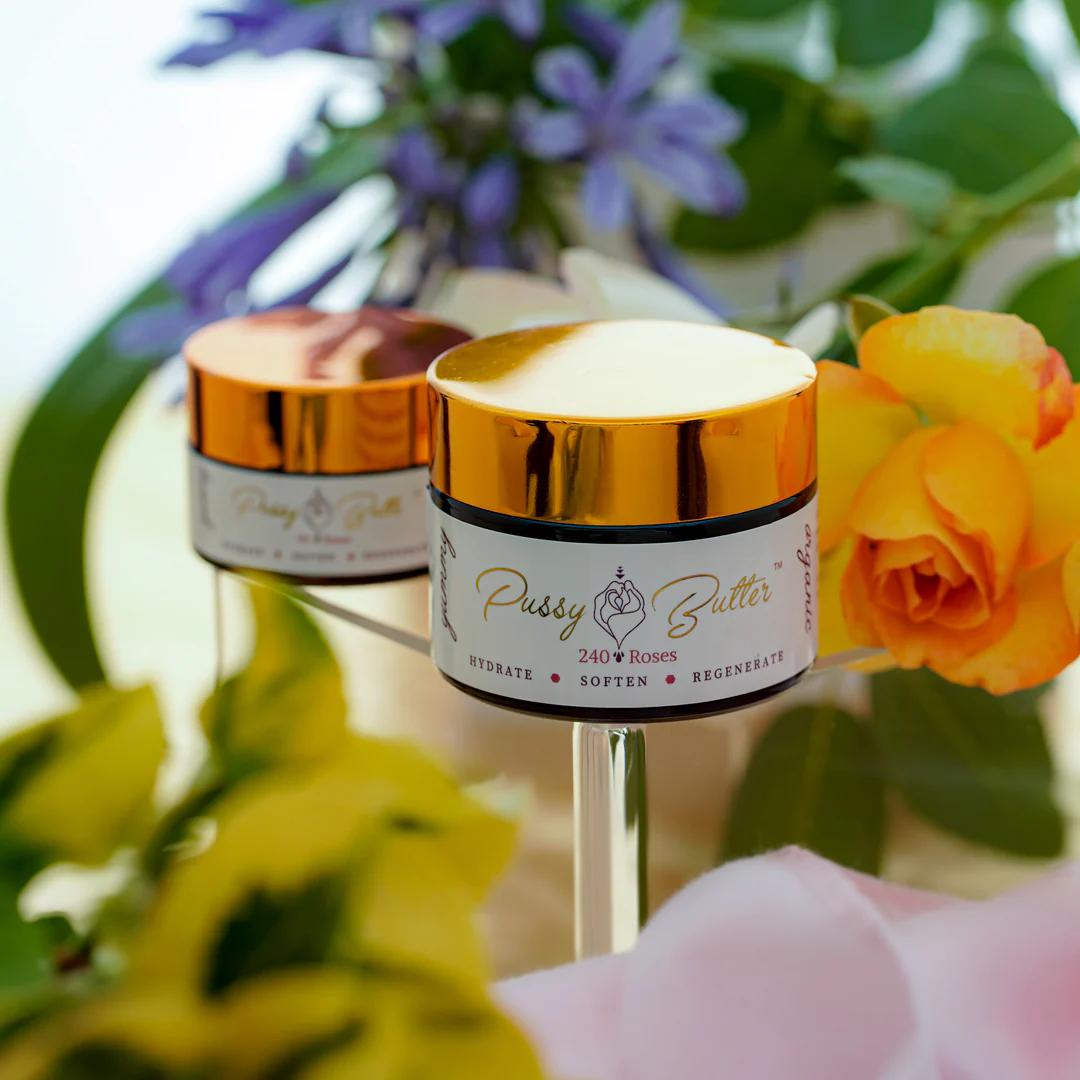
The Pussy Butter™ in our shop is a nourishing daily moisturizer for keeping the tissue supple and hydrated between uses. For a lighter, more absorbable feel there are our yoni serums, such as Petal Soother Yoni Oil Serum to calm dry, sensitive tissue, and Petal Primer Yoni Serum to condition and prep it as part of a routine.
Vaginal Lubricants
A vaginal lubricant is used in the moment, right before or during sex, and its only job is to reduce friction so intercourse feels comfortable instead of raw or painful. It sits on the surface rather than rebuilding the tissue, and it wears off afterward. Lubricants are not meant to be absorbed. A lubricant solves the immediate problem of friction but it does little for your day-to-day baseline. That is why a woman can use lubricant during sex and still feel dry the rest of the week, as she is treating the moment but leaving the baseline untouched.
Water-based lubricants are the standard first choice. They feel close to the body's own lubrication, rinse off easily, suit sensitive skin, and stay safe with latex condoms and silicone toys. Their one limitation is that they dry out as the water evaporates or absorbs, so you may need to reapply during longer sex. Look for one without glycerin if you are prone to yeast infections, since glycerin is a sugar that can feed yeast, and skip ones with added warming or flavoring agents, which commonly irritate.
Natural oils are the other common route, and many women prefer them because they last longer and feel richer. Oils you can try are:
-
Coconut oil is the most popular as it is solid at room temperature, melts on contact, and has mild antimicrobial properties.
-
Extra virgin olive oil is heavier and longer-lasting. Vitamin E oil doubles as a tissue-soothing agent and is often used for healing dry, irritated skin.
-
Hemp seed oil is light and absorbs well.
-
Aloe vera gel is water-compatible, cooling, and good for sensitive or inflamed tissue.
Blood Flow Is Aliveness
Blood carries oxygen and nutrients to the vaginal tissue, and that delivery is what keeps the tissue thick, elastic, and able to lubricate itself. Sexual stimulation increases blood flow to your vagina and makes your vaginal tissue more elastic. So anything that brings circulation to the area supports vaginal health directly, at the level of the tissue itself. The old phrase "use it or lose it" carries real physiology, as people who have sex more often tend to have milder cases of atrophy than those who stop having sex.
Staying sexually active, with a partner or on your own, is one of the most effective ways to maintain this. Regular vaginal sexual activity through either intercourse or self pleasure is important for vaginal health after menopause because it stimulates blood flow, helps keep your vaginal muscles toned, and maintains your vagina's length and stretchiness. Regular sexual activity is a genuine preventive measure for atrophy.
Arousal itself does part of the work. Feeling desired, relaxed, and connected drives blood flow and lubrication, while stress and disconnection suppress them. When you feel safe and turned on, blood vessels open and blood flows to the pelvis; when you feel stressed, your body stays in a guarded state that pulls circulation away.
Yoni Eggs
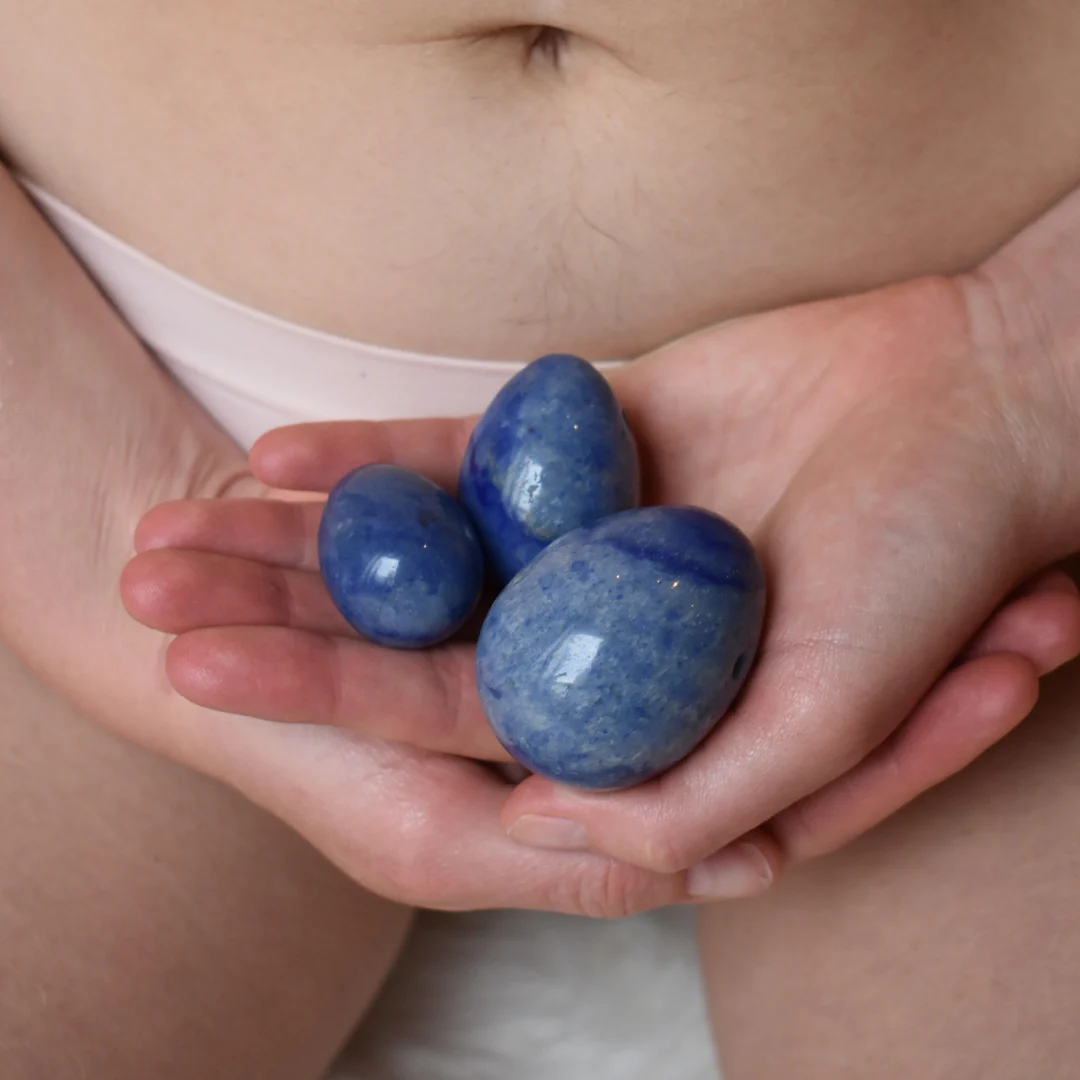
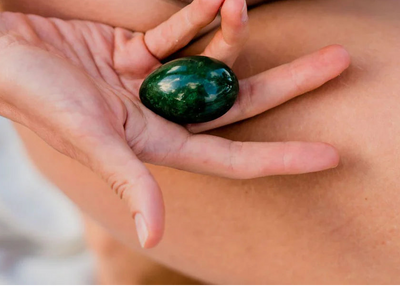
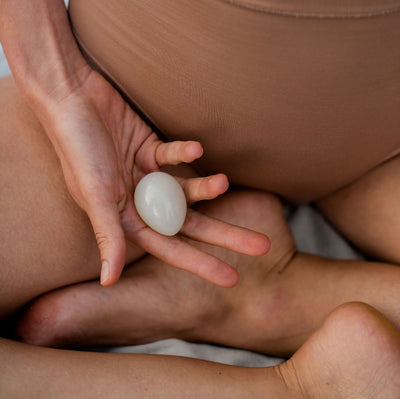
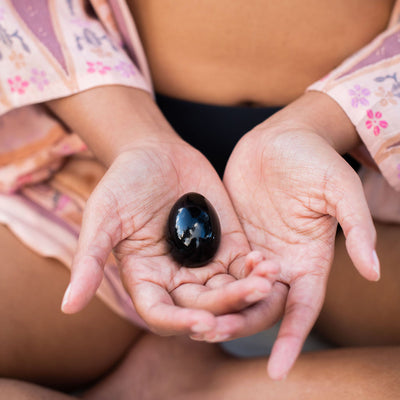
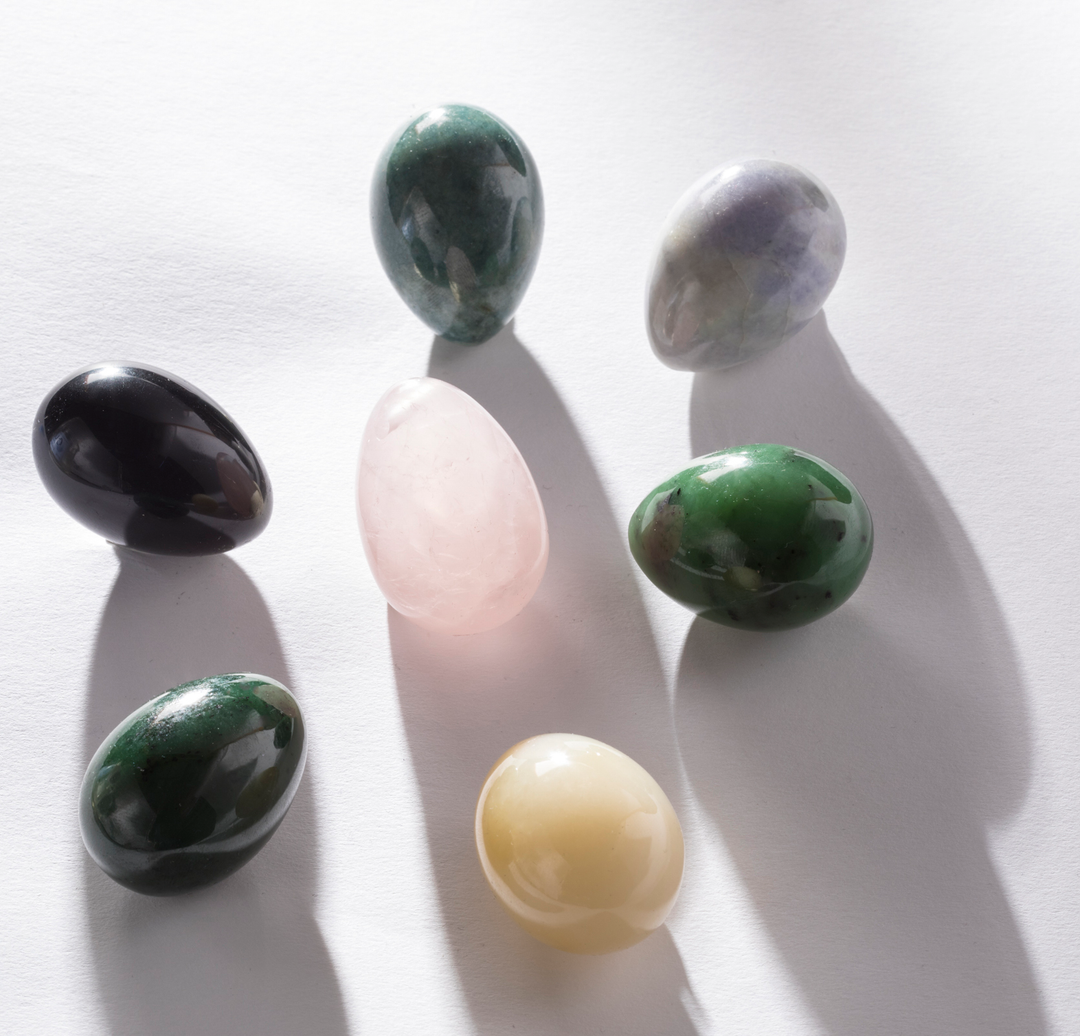
A yoni egg is a smooth, egg-shaped stone designed to be held inside the vagina, used as a tool for pelvic-floor engagement and internal awareness. You insert the egg, then gently squeeze and release your pelvic floor around it. Once the egg is in place, you engage your pelvic floor muscles as if doing Kegel exercises, hold for a few seconds, then release. The egg adds weight and resistance, so the muscles work against something as you contract and relax.
Working the pelvic floor draws blood to the pelvic region, and the focused attention the practice requires builds the body-literacy needed to keep the blood moving and the area active and engaged. A yoni egg practice helps increase local circulation and reawakens nerve pathways, so you experience more sensation and stronger contractions. For the dryness and thinning of atrophy, that circulation is the relevant benefit, and several sources note that during menopause, increased blood flow and stimulation can help minimize dryness and discomfort.
This is a connection and pelvic-floor practice rather than a medical treatment for atrophy, so understand it as support for circulation and body awareness rather than a cure.
Read: What Size Yoni Egg is Your Best Fit? A Complete Guide
Crystal Wands
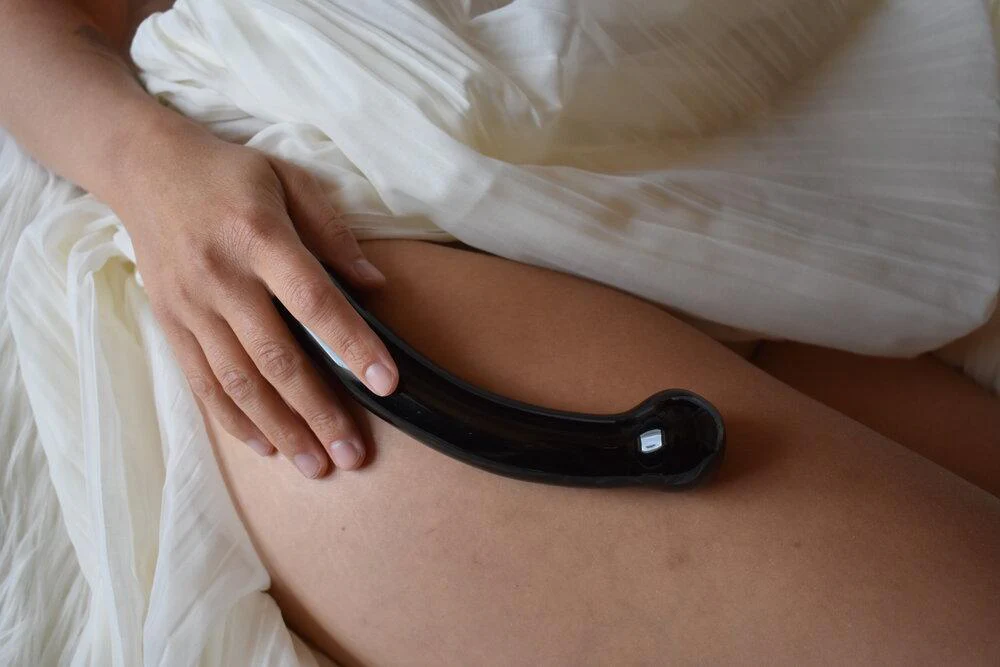
Amrita Wand® | Black Obsidian Massage Wand
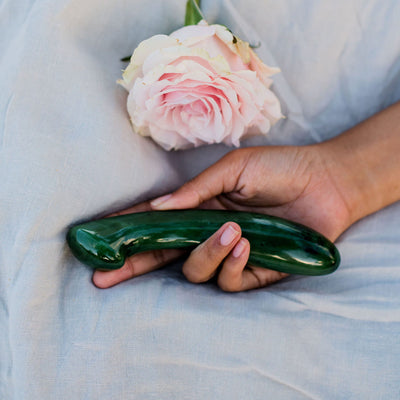
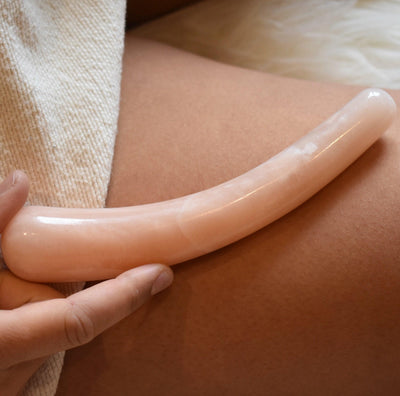
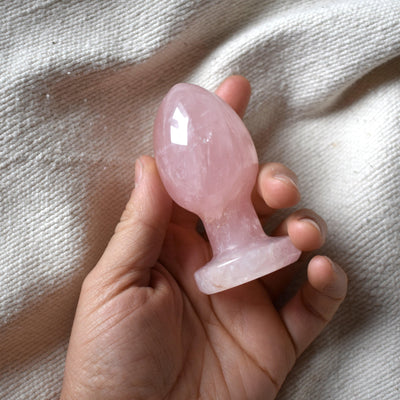
A crystal wand is a smooth, elongated stone used for gentle internal massage. Where the egg trains the muscles through squeeze and release, the wand works through pressure and touch and you use it to apply slow, gentle pressure to the vaginal walls, exploring areas of tension, numbness, or sensitivity.
Its value, like the egg's, lies in bringing circulation and attention to the area. Applying gentle pressure to the vaginal walls brings blood flow to specific areas and helps you map your own internal sensation and helps with locating where you feel responsive, where you feel little, where you hold tension. For tissue affected by atrophy, the gentle stimulation and the arousal it brings helps with keeping the circulation moving to tissue that depends on it.
A wand concentrates pressure on a small area, so with thinner, atrophied tissue the risk of irritation or a small tear is real. Go slowly, use plenty of lubrication, never force, and stop at any pain.
Nourish From the Inside
Healthy tissue starts with a well-supplied body, and the vagina is part of that whole. What you put into your body builds the terrain your tissue depends on, working gradually and modestly rather than fixing atrophy outright. Here is what supports it:
-
Stay hydrated: Consistent water intake supports moisture throughout your tissues, the vaginal lining included. It is a small, foundational habit worth keeping.
-
Eat phytoestrogen-containing foods: Soy, flaxseed, and legumes contain plant compounds that mildly mimic estrogen in the body, gently supporting the system affected by declining estrogen levels.
-
Get enough healthy fats: Avocado, nuts, oily fish, and olive oil support hormone production and overall tissue health.
-
Include vitamin E: Found in nuts, seeds, and leafy greens, it supports skin and mucous-membrane health, the vaginal lining included.
-
Approach herbal supplements with care: Many women take herbs like black cohosh, red clover, or sea buckthorn oil for menopausal and vaginal symptoms. The evidence varies considerably from herb to herb, and product quality varies just as much, since supplements face lighter regulation than medicines. They can also interact with medications and carry real effects of their own.
Knowing Your Options
Natural approaches help many women meaningfully, and it is worth saying plainly that sometimes the tissue needs more support than they can give. Choosing medical help is itself an act of body care rather than a failure of the natural path. The aim throughout this article has been to know your body and respond to it well, and medical treatment is part of that same response when symptoms call for it.
Here are the main medical options, laid out neutrally so you can have an informed conversation with a provider.
-
Local estrogen treatment: This delivers a low dose of estrogen directly to the vaginal tissue through a cream, tablet, ring, or suppository. Because it acts locally, very little enters the bloodstream, and it directly rebuilds the thickness, elasticity, and moisture that declining estrogen took away. This is the most targeted hormonal option for vaginal atrophy specifically.
-
Hormone replacement therapy: This also includes oral estrogen, works on the whole body rather than the vaginal tissue alone. Women usually consider it when menopausal symptoms reach beyond the vagina to include hot flashes, night sweats, and sleep disruption. It treats the broader picture of menopause, with vaginal benefit as one part.
-
Non-hormonal medical options: These exist for women who prefer to avoid hormones or have reason to. These include prescription medications that act on vaginal tissue without systemic hormones, alongside vaginal dilator therapy, which uses graduated insertable devices to gently restore comfort and elasticity over time, often after pain has made penetration difficult.
FAQ
A few vitamins come up consistently in discussions of natural remedies for vaginal health. Vitamin E is the most prominent, and when applied topically as an oil or suppository, it soothes and supports the vaginal tissues, and taken in the diet through nuts, seeds, and leafy greens, it supports mucous-membrane health more broadly. Vitamin D supports tissue health and immune function, which matters since healthy estrogen levels and tissue work together to keep infections at bay. Vitamin A and the omega-3 fatty acids found in oily fish and flaxseed support skin and mucous-membrane integrity, contributing to vaginal moisture from the inside. Sea buckthorn oil, rich in omega-7, is often used specifically to alleviate vaginal dryness.
The symptoms associated with vaginal atrophy build gradually as estrogen levels fall, so many postmenopausal women notice them creeping in rather than arriving overnight. The most common feeling is dryness and a persistent lack of vaginal moisture that can make everyday sitting, walking, or exercise uncomfortable. As the vaginal tissues thin and lose elasticity, many women feel burning, itching, or general irritation, and sexual intercourse often becomes uncomfortable or painful as natural lubrication drops. Because the same hormonal shift affects urinary health, you may also experience more frequent urination, urgency, or recurrent urinary tract infections. Some women feel a tightness or loss of stretchiness, since reduced vaginal elasticity changes how the tissue moves and responds.
Restoring vaginal moisture works on two levels, including from the outside and from within. On the outside, a vaginal moisturizer used regularly, every two to three days, helps the tissue hold water and maintains your everyday baseline, while a natural lubricant used during sexual intercourse reduces friction in the moment. Look for body-friendly options, and patch-test natural moisturizers like vitamin E or hyaluronic acid first. From within, hydration matters, and drinking enough water supports moisture across all your tissues, the vaginal lining included. Promoting blood flow to the area genuinely helps too, since circulation delivers the nourishment that keeps tissues plump and self-lubricating. Regular sexual activity or self-pleasure, gentle movement, and pelvic-floor engagement all promote blood flow and support natural lubrication over time.



Leave a comment