








Yoni Eggs: How to Use Them Safely & Effectively

You finally got your yoni egg, and you want to use it well.
There are plenty of ways to use one effectively, and just as many ways to use one ineffectively. Done right, a yoni egg can strengthen your pelvic floor and create a genuine felt connection to your own body that most women have never experienced before.
In this guide we share exactly how to use your yoni egg for real benefit, including how to prepare, insert, and remove it correctly, a full three-position resistance practice, and a few routines you can build into your week.
Choosing and Preparing Your Egg
Stone Guide
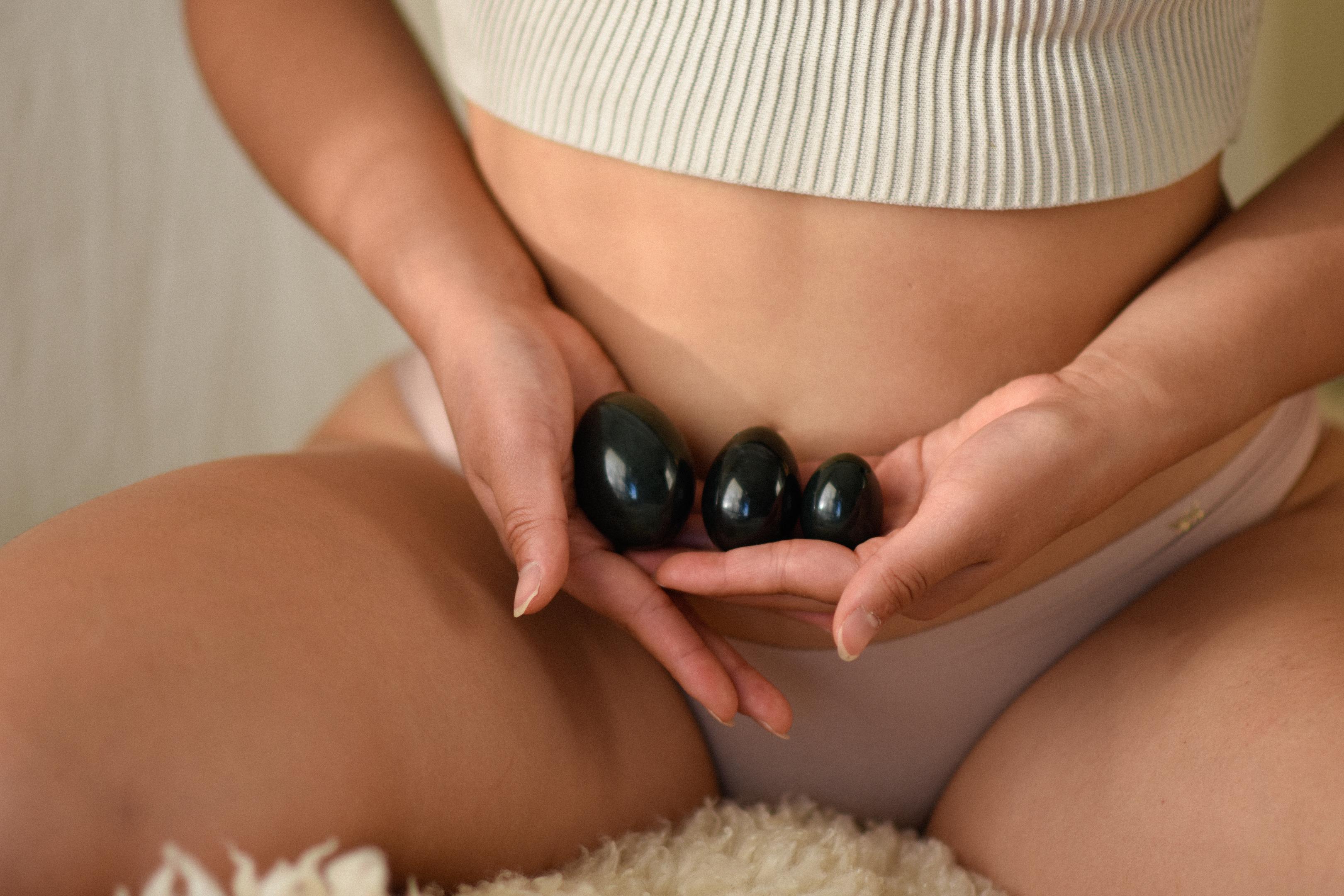
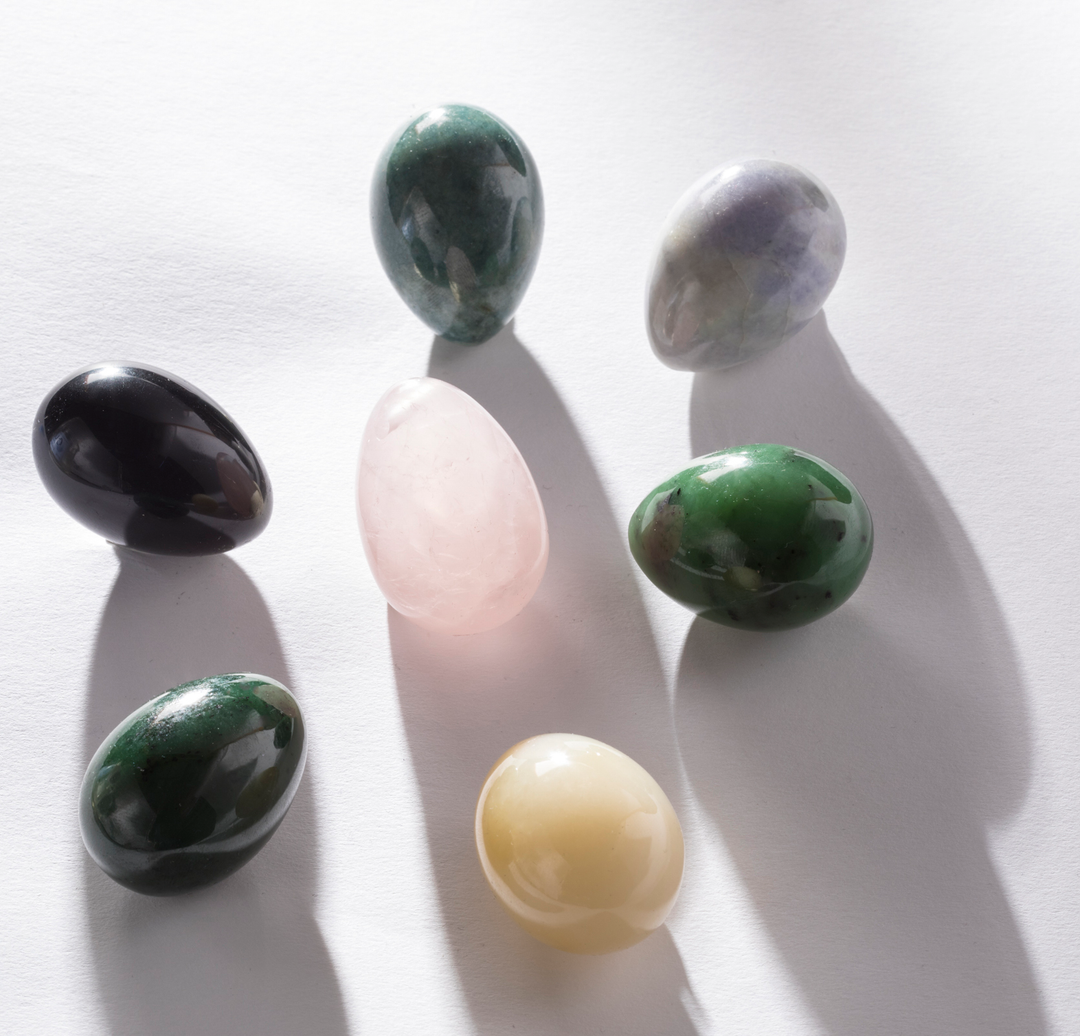
Yoni eggs come in a range of stones, and each is believed to carry its own unique spiritual and energetic properties. Your stone type choice can be guided by what you most want to support energetically in your practice.
|
Stone |
Spiritual & Energetic Properties |
|---|---|
|
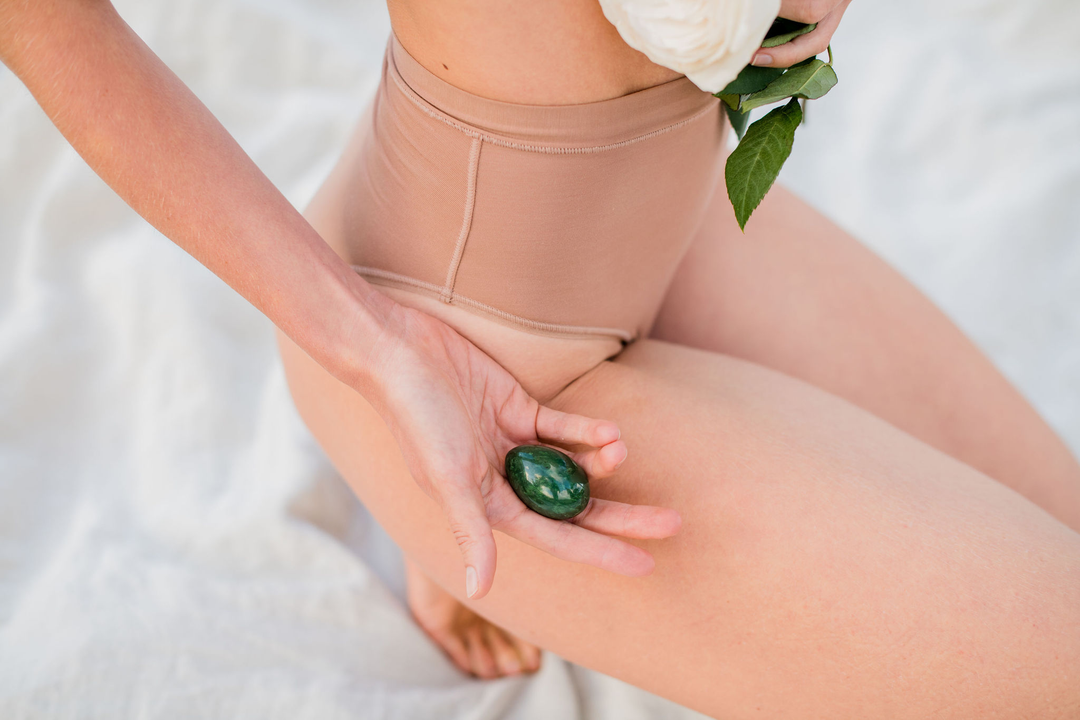
Nephrite Jade |
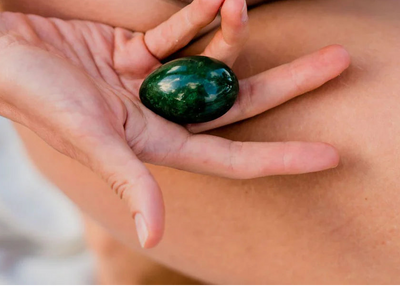
The traditional yoni egg stone. Nephrite Jade is the most common material for beginners due to its durability and non-porous nature. It is associated with vitality, longevity, and a steady connection to the body. |
|
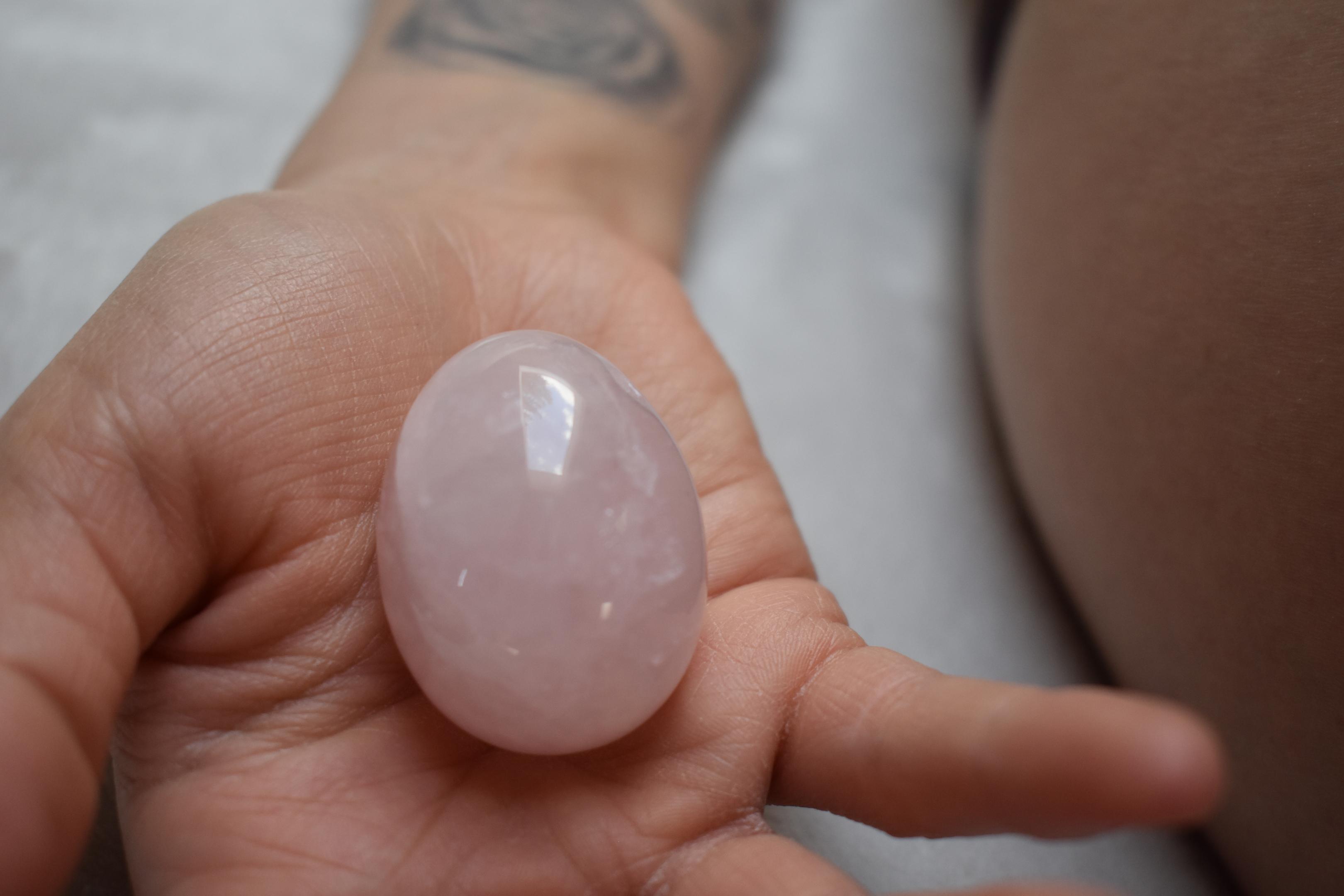
Rose Quartz |
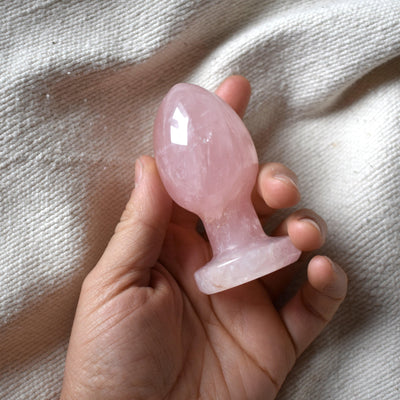
Strongly connected to the heart. Works with self-love, emotional tenderness, and softening patterns of closure or guardedness around intimacy. |
|
Black Obsidian |
A stone for deep work. Used to surface and release old emotional patterns, energetic residue, and anything that has been held but not processed. Not recommended for beginners. |
|
Indian Jade |
Quieter and more balancing than nephrite. Supports a sense of harmony and ease, and works well for women who feel scattered or dysregulated. |
|
Clear Glass |
A practical, neutral option for women who want the physical practice without a specific energetic influence. |
|
Red Carnelian |
Warming and activating. Connected to the sacral centre, creative energy, sensuality, and vitality. A good choice for women working to reconnect with pleasure. |
|
Amethyst |
Calming and inward-facing. Supports stillness, meditation, and intuitive awareness. Works well for women who want to bring a contemplative quality to their practice. |
|
Blue Quartz |
Gentle and clarifying. Associated with emotional expression and the softening of communication with others and with oneself. |
|
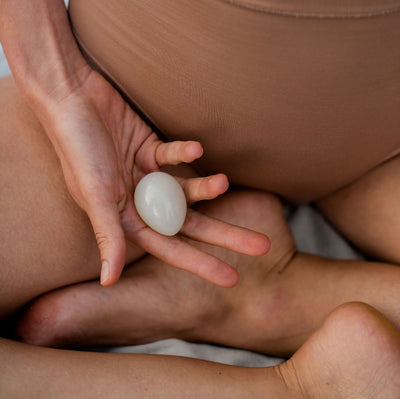
Clear Quartz |
An amplifier rather than a specific energy. Strengthens intention and works well alongside other stones or on its own when clarity of purpose is the focus. |
Size Guide
Yoni eggs typically come in three sizes, including small, medium, and large. Each size serves a different function and stage of practice, so the right choice depends on where your body currently is. Beginners should start with larger yoni eggs to ease insertion and allow for better muscle grip.
|
Size |
Dimensions |
Best For |
|
|---|---|---|---|
|
Large |
50 x 38mm |
Great for women who have given birth vaginally, or anyone starting out who needs to build foundational strength before moving to a smaller size. |
|
|
Medium |
43 x 30mm |
Ideal for most beginners. Versatile, comfortable, and the easiest size to work with when you're finding your feet. |
|
|
Small |
35 x 25mm |
Best for advanced practitioners or petite anatomy. This size demands more refined muscle control and awareness. |
|
Read: What Size Yoni Egg is Your Best Fit? A Complete Guide
Benefits of Using Yoni Eggs
-
Regular practice of pelvic floor exercises can lead to improved urinary continence, increased pleasure during sexual activity, and a healthier connection with one's body.
-
A yoni egg practice can help with enhanced sexual awareness, improved muscle tone, and spiritual connection.
-
Using a yoni egg can enhance the orgasmic response by developing stronger pelvic floor muscles that contract during orgasm, potentially leading to deeper and more intense orgasms.
-
Yoni eggs promote a healthier connection with your body, encouraging self-awareness and acceptance of female anatomy, which can be empowering for many women.
How to String Your Yoni Egg
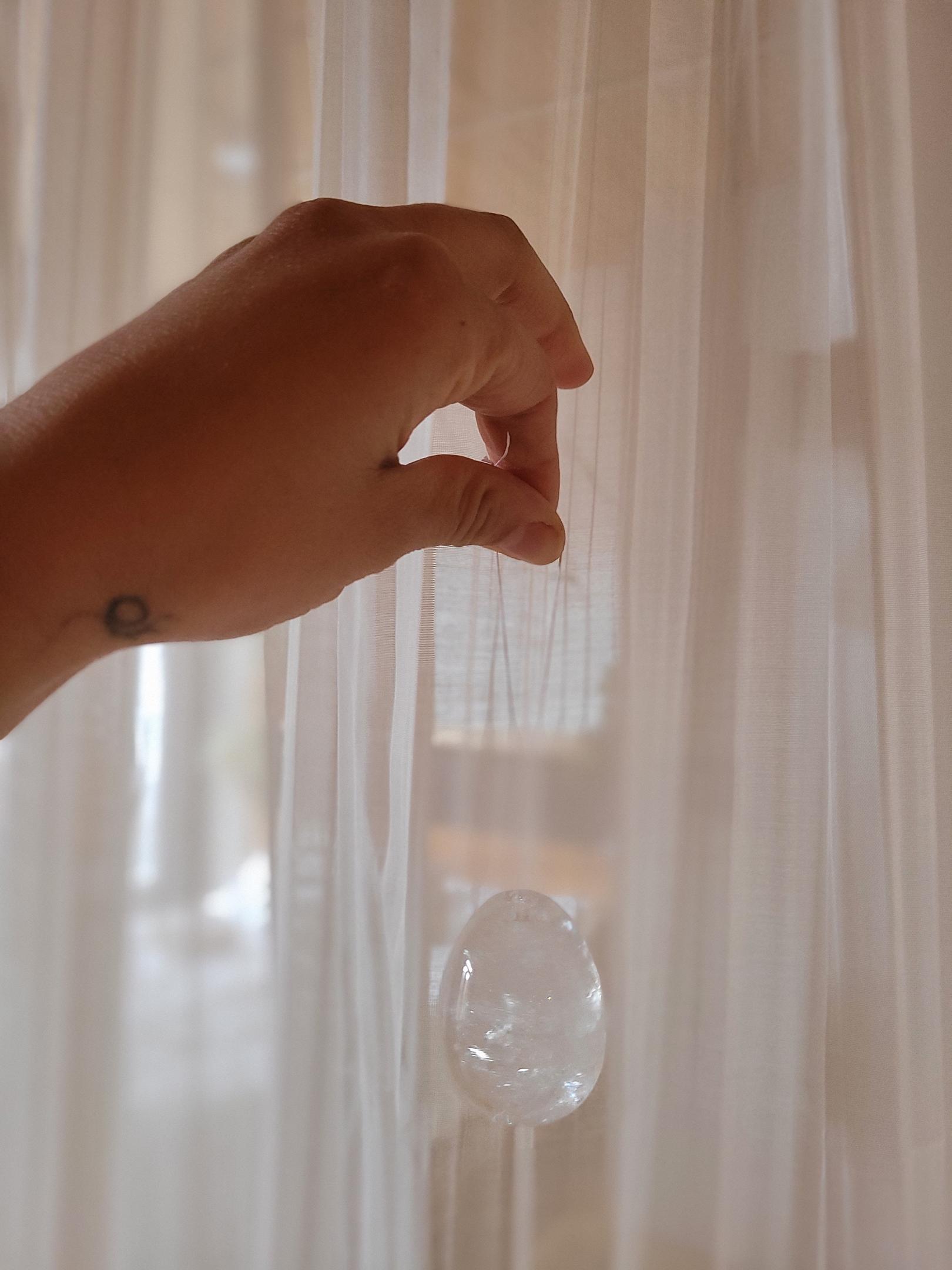
Using a string threaded through a drilled hole in the yoni egg can make removal easier, and it is important to ensure the string is easily accessible during insertion.
For the string itself, you have a few options. Unwaxed dental floss is the most commonly used material and works well, as it's strong, thin enough to thread easily, and widely available. Natural cotton or hemp twine are also suitable. Whatever you use, most string materials should be discarded after each session and replaced with a fresh piece before your next practice, as fibres can harbour bacteria after use.
The organic silk yoni egg string in our shop can be reused. simply wash it together with your egg using warm water and mild unscented soap, rinse thoroughly, and allow it to dry completely before storing.
To string your egg:
-
Thread your string through the drilled hole so both ends hang evenly from the base of the egg.
-
Tie a small, secure knot as close to the egg as possible, this prevents the string from pulling through during practice.
-
Once inserted, the string hangs downward and remains outside the vaginal opening, exactly like a tampon string.
-
Check that the knot is firm and the string feels secure before insertion.
Cleaning Your Yoni Egg: Physical and Energetic Preparation
Physical Cleaning
Before and after every practice, your egg needs a proper clean.
-
Wash your Yoni Egg before and after use with a chemical-free soap or essential oil to remove bacteria and sterilize the egg. Heavily fragranced soaps, antibacterial washes, and anything containing essential oils can disrupt vaginal pH and leave chemical residue on the stone's surface. The drilled hole needs particular attention. Avoid getting soap inside it, as residue trapped in that channel is difficult to fully rinse out and can introduce bacteria into the vaginal canal during practice.
-
Remove the string before washing. Wash the egg gently with your fingers, paying close attention to the surface around the hole and any natural texture or grooves in the stone. Rinse thoroughly under warm running water until there's no trace of soap, then set it on a clean surface to air dry completely. Don't towel-dry and don't put it away while it's still damp as moisture trapped against the stone or inside the pouch creates exactly the conditions you're trying to avoid.
-
If you want a deeper clean for any stone, a ten-minute soak in a solution of one part apple cider vinegar to three parts water, followed by a thorough rinse, is a safe and effective option.
-
If you drop your Yoni egg in the toilet, it is crucial to clean it thoroughly with warm water and mild soap to ensure it is sanitized for future use.
-
Avoid using boiling hot water directly on your Yoni egg, as it may crack; instead, use warm soapy water for cleaning.
-
Store your egg in a breathable cotton or silk pouch between uses. A sealed container or plastic bag traps moisture and doesn't allow airflow, which matters more than it might seem for a stone you're using regularly.
Read: How to Clean Your Yoni Egg: The Complete Guide
Preparing Yourself and Creating Your Sacred Space
The pelvic floor is directly wired to the nervous system, and the nervous system responds to environment before it responds to intention. A woman who feels rushed, exposed, or mentally scattered will carry that tension directly into her pelvis. The pelvic floor muscles are among the most responsive in the body to stress and perceived threat, which means felt safety is what makes authentic engagement possible in the first place.
Practically, this means being in a warm, private room with the door closed and the phone off. Candles or low lighting help shift the nervous system out of task mode. Put on some music that feels settling rather than stimulating. Have a blanket, like the Free Bleed® Blanket nearby in case you want to lie down.
Allow at least 20 to 30 minutes for a full session.
Setting Your Intention
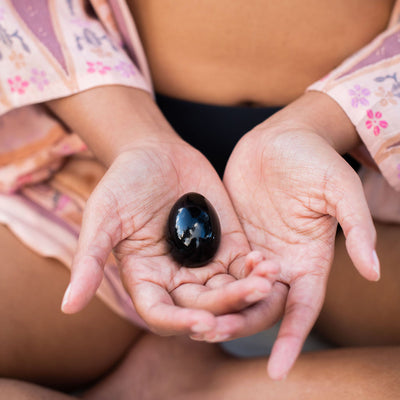
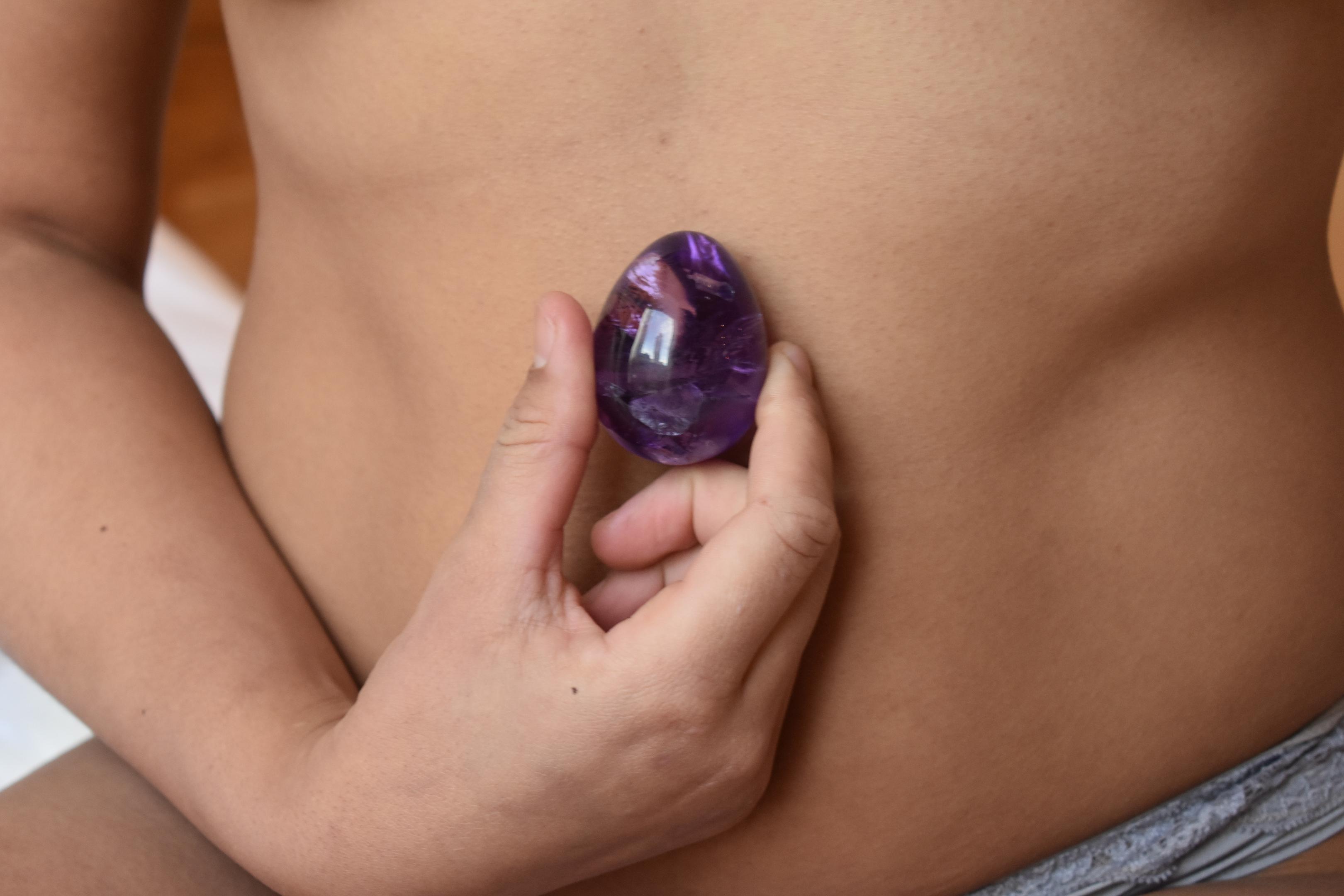
Before insertion, bring the egg to rest at your heart, held between both palms, against your chest. Take a few slow breaths here and decide what you're showing up for today.
Intentions can be:
-
Building pelvic floor strength and muscle tone
-
Supporting recovery from vaginal childbirth
-
Working with urinary incontinence
-
Releasing stored tension or emotional holding in the pelvis
-
Awakening sensation and pleasure
-
Deepening body awareness and internal sensitivity
-
Cultivating self-love and a more conscious relationship with your body
Whatever your intention, holding it clearly orients your nervous system toward a specific quality of engagement, which changes how the body responds during practice. And it activates the energetic properties of the stone itself. Crystals work with directed intention; the clearer yours is before you begin, the more actively the stone's properties are engaged throughout the session.
How to Insert Your Yoni Egg
Warming the Egg
Never insert a cold stone. Temperature shock to vaginal tissues causes an involuntary contraction response, which is the opposite of what you're preparing for. Before insertion, warm the egg to body temperature by holding it against your skin for a few minutes, tucking it against your inner thigh or belly, or running it briefly under warm water. It should feel neutral or slightly warm to the touch before it goes anywhere near the vaginal opening.
At the Entrance Before You Insert
Before inserting, bring the egg to the entrance of the vagina and simply rest it there. Don't push. Don't guide. Just let it make contact and notice what that feels like. Feel its temperature, weight, pressure, and sensation. Take a few slow breaths and allow your awareness to settle at the entrance.
From here, begin to move the egg gently. Trace small circles around the vaginal opening, glide it slowly along the inner lips, bring it into contact with the inner thighs. The purpose of this is building genuine arousal and blood flow to the vaginal tissues before anything enters the body. Aroused tissue is engorged, lubricated, and elastic. Insertion into unaroused tissue is uncomfortable at best and counterproductive at worst.
If additional lubrication is needed, a small amount of organic oil, like coconut, almond, or jojoba works well. Avoid synthetic lubricants, which can disrupt vaginal pH and interact with certain stones.
Asking the Body for a Yes
The body has its own readiness signal, and insertion before that signal arrives is a form of overriding it. What you're listening for is a yes, and this comes with a softening at the entrance, a subtle warmth, a quality of openness that can feel almost like a gentle drawing inward. Some women experience it as a clear physical sensation; others notice it more as an absence of resistance. Either way, when it's there, you'll recognise it.
A no, or a not yet, is equally clear once you learn to listen for it. This can manifest as a subtle closure, a sense of the tissues drawing back, tension that doesn't shift with breathing. If you meet this, stop. Stay at the entrance. Return to slow, conscious breath and gentle touch.
Never insert through resistance, not even mild resistance. The entire premise of this practice rests on the body's willing participation, and what the body agrees to, it engages with differently than what it endures.
Inserting and Placing the Egg
When the yes is present, guide the egg inside slowly using your middle finger, narrow end first. The target placement is the middle of the vaginal canal, roughly halfway between the entrance and the cervix. This is the position from which the three-part practice works most effectively.
Once inside, the string should hang downward and remain outside the vaginal opening and visible and accessible, exactly like a tampon string.
When the egg is in place, simply pause. Breathe. Bring your full awareness to the egg's presence inside the body and focus on its weight, its temperature, and the subtle sense of it resting there. Some women notice residual tension around the egg at first; a few slow, full exhales directed consciously toward the pelvis will usually bring a settling. Give yourself a moment here before moving into the practice itself.
Read: How To Know if Your Certified Yoni Egg Is Safe & Ethically Sourced
The Yoni Egg Practice: The Three-Position Resistance Protocol
By applying a gentle downward pull on the string while the vaginal muscles engage to hold the egg in place, you create actual resistance training through two opposing forces meeting in the pelvic floor. This is what produces the kind of strength and neuromuscular awareness that kegels alone can't replicate.
The egg moves through three positions during the practice, including middle, upper, and lower, and you complete 15 repetitions at each position before moving to the next. The whole sequence takes around 20 minutes when done with full attention.
Choosing Your Breath Pattern
Before you begin, choose one of the following breath rhythms and use it consistently throughout the entire session. Switching between them mid-practice breaks the rhythm and reduces the training effect.
Option A: Microcosmic Orbit: Inhale and visualise the breath travelling up the spine. On the exhale, apply the downward string pull and engage the vaginal muscles simultaneously. Release fully on the next inhale before repeating.
Option B: Direct Engagement: Inhale to prepare and engage the muscles and apply the pull at the top of the inhale. Exhale fully and release completely. This option tends to feel more intuitive for beginners.
Begin with a very light downward pull. If the egg moves toward the entrance or pops out, the resistance is too strong for where your muscles currently are. Reduce the pull until you find the threshold where the muscles have to work to hold the egg in place but can do so without strain. That threshold is your starting point, and it will shift as your practice develops.
Position One: Middle of the Vaginal Canal
This is your starting position, with the egg resting midway between the entrance and the cervix, where you placed it during insertion.
Take a few orienting breaths before you begin. Once you feel settled, start your chosen breath pattern and begin your repetitions of the string pull on the designated breath, muscular engagement to hold the egg in place, full release before the next rep. Keep the breath moving throughout, do not hold it at any point during the sequence.
Complete 15 repetitions here before moving on.
Position Two: Upper Position Toward the Cervix
From the middle position, guide the egg upward toward the cervix. Some women are able to move it using their pelvic muscles alone; others will find it easier to guide it gently with a finger. Both are fine, and the ability to move it internally develops naturally over time.
Before beginning your repetitions, take a few slow breaths and allow the body to settle around the egg's new placement. The upper position accesses the deeper layers of the pelvic floor and it can feel noticeably different from the middle position, feeling more internal and sometimes more emotionally resonant. Give yourself a moment to arrive here before you begin working.
Complete 15 repetitions in this position.
Position Three: Lower Position Toward the Entrance
Move the egg downward toward the entrance of the vaginal canal. This is the most challenging position in the sequence, and it's worth knowing in advance that the egg will often pop out when resistance is applied here, especially early in your practice. The muscles closest to the vaginal opening are typically the least trained and the least consciously accessible.
If this happens, support the egg gently with your fingers at the entrance while engaging the muscles around it. This allows you to complete the rep even when the holding strength isn't yet there. Over time, usually within a few weeks of consistent practice, the body learns to articulate these lower muscles with real precision, and the support becomes unnecessary.
Complete 15 repetitions here. Partial reps count while strength is building. Progress in this position is one of the clearest markers of genuine pelvic floor development.
Additional Exercises to Explore Over Time
It is generally advised to start with wearing the yoni egg for 5 minutes at a time and gradually increase the duration as pelvic floor strength improves, with a maximum recommended time of 20 minutes while awake and active. Once the three-position protocol feels established, the following exercises can be introduced to deepen and diversify the practice.
-
Basic kegel pulses with the egg: Squeeze, hold for 3 to 5 seconds, release fully. The release is as important as the squeeze, as a pelvic floor that can't fully let go is as dysfunctional as one that can't engage. Train both directions equally.
-
Flutter contractions: Do rapid, short pulses in quick succession. These train muscular endurance rather than strength and are particularly useful for women working with urinary incontinence or postpartum recovery.
-
Breath-coordinated holds: Exhale to engage, inhale to release completely. This trains the natural relationship between breath and pelvic floor, one of the most functionally important patterns in the body, and one that chronic tension or trauma frequently disrupts.
-
Abdominal pressure awareness: As you practise, pay attention to whether you're bearing down and pushing outward and downward while squeezing. This is a common compensation pattern and one worth correcting early. Bearing down during pelvic floor engagement creates downward pressure on the pelvic organs over time, which works directly against the purpose of the practice. The engagement should feel like a lifting and drawing inward, not a pushing outward.
-
Movement practice: Gentle yoga and slow hip circles with the egg inside develops positional awareness and the ability to sense and engage the pelvic floor across different orientations and movements. Keep movement sessions to a maximum of 20 minutes and stay within a comfortable range of motion throughout.
Read: How to Use Yoni Eggs for Fertility Support
How to Remove Your Yoni Egg
After using a yoni egg, it is recommended to remove it by returning to a lying down or squatting position and gently pulling the string, ensuring to wash the egg with mild soap before and after each use.
For undrilled eggs, squat over a soft surface and bear down with the same gentle effort. Gravity and pelvic pressure do most of the work. If you need a little more assistance, insert your middle finger, curve it forward toward the front wall of the vagina, and scoop gently toward the entrance.
Signs of Genuine Progress:
-
Increased vaginal sensation and internal sensitivity
-
Improved bladder control and urinary flow
-
Greater capacity for orgasm and pleasure
-
Emotional shifts, particularly around intimacy, body trust, and self-connection
-
A felt sense of aliveness and awareness in the pelvic bowl that wasn't there before
What Are the Cons of Yoni Eggs?
Infection Risk if Hygiene is not Maintained
Any object inserted inside the vagina needs to be scrupulously clean. Wash your egg with warm water and mild, unscented soap before and after every single use. Avoid boiling hot water directly on the stone as this can cause cracking. Warm soapy water is sufficient. Never use harsh chemicals, fragranced soaps, or essential oils inside the drilled hole, as residue is difficult to remove and can introduce bacteria. If you drop your egg, wash it thoroughly with warm water and mild soap before using it again. Inspect yoni eggs for chips, rough patches, or hairline cracks before use to prevent bacteria growth and tissue damage.
Beyond physical cleaning, it's important to energetically cleanse your yoni egg regularly. Crystals absorb energy between sessions, and techniques like leaving the egg under a full moon or smudging it with sage help neutralise that accumulation and maintain the stone's healing properties.
Not Suitable for Everyone
Avoid yoni egg practice during menstruation, pregnancy, or if you are experiencing a pelvic infection, active inflammation, or conditions involving pelvic muscle tension. If you experience pain during or after use, stop and consult a healthcare provider.
Requires Correct Technique to be Effective
Used incorrectly without the breath coordination, the resistance protocol, or the body-listening approach covered in this guide, a yoni egg is just a stone sitting inside your vagina. The practice produces results because of how it's done, not simply because the egg is present. This is also why the common comparison to kegel exercises slightly misses the point as the resistance and positional awareness that yoni egg exercises introduce goes well beyond standard kegels, but only when the technique is actually applied.
Read: Can You Use a Yoni Egg While Pregnant? How to Use Without Risk
Frequently Asked Questions
For active resistance training try the three-position protocol covered in this guide. 15 to 20 minutes per session is the recommended window. This is enough time to complete a full sequence across all three positions without fatiguing the pelvic floor muscles. Guided yoni egg exercises are typically recommended two to three times a week rather than daily, which gives the vaginal wall muscles adequate recovery time between sessions.
If you're new to the practice, start shorter. Five to ten minutes of active work is a reasonable entry point, and building duration gradually produces better results than pushing through fatigue from the beginning. Beginners should also start with a larger egg, which is easier to grip and work with while the muscles are still developing their awareness and strength.
What the practice doesn't call for is passive wearing throughout the day. Leaving a yoni egg in for hours at a time while working, exercising, or going about your day is not a substitute for active pelvic floor exercises and introduces unnecessary risk. Prolonged use can cause muscle fatigue, and a fatigued pelvic floor is more prone to dysfunction than a well-rested one.
The egg is inserted inside your vagina, with the narrow end pointing inward and the string hanging downward outside the vaginal opening. The target placement for active practice is the middle of the vaginal canal which is the position from which the three-position resistance protocol works most effectively.
Before insertion, take a few deep breaths and spend time at the entrance first. Massage the vulva slowly to stimulate blood flow and arousal fluid, which acts as the body's natural lubricant and signals that the vaginal tissues are ready to receive the egg. The egg does not travel beyond the vaginal canal and the cervix sits at the upper end and the uterus is behind it, so there is nowhere for it to go.
The pelvic floor is not designed to hold a weight in constant contraction for hours at a time. Wearing a yoni egg all day creates sustained muscular effort that leads to fatigue and, over time, can contribute to a tight vagina, pelvic tension, and paradoxical weakening of the muscles you're trying to strengthen. For women already dealing with hypertonic pelvic floor issues, prolonged wear can actively worsen symptoms including pain and restricted urine flow.
There is also an infection risk to consider. Any object worn inside the vagina for an extended period increases the bacterial load in the vaginal environment. Even a thoroughly cleaned egg can disrupt vaginal pH over hours of wear, raising the risk of bacterial vaginosis or vaginal infection. This risk increases significantly if the egg is not made from a genuinely non-porous material.



Leave a comment