











What Are Yoni Eggs & How Do They Actually Work?
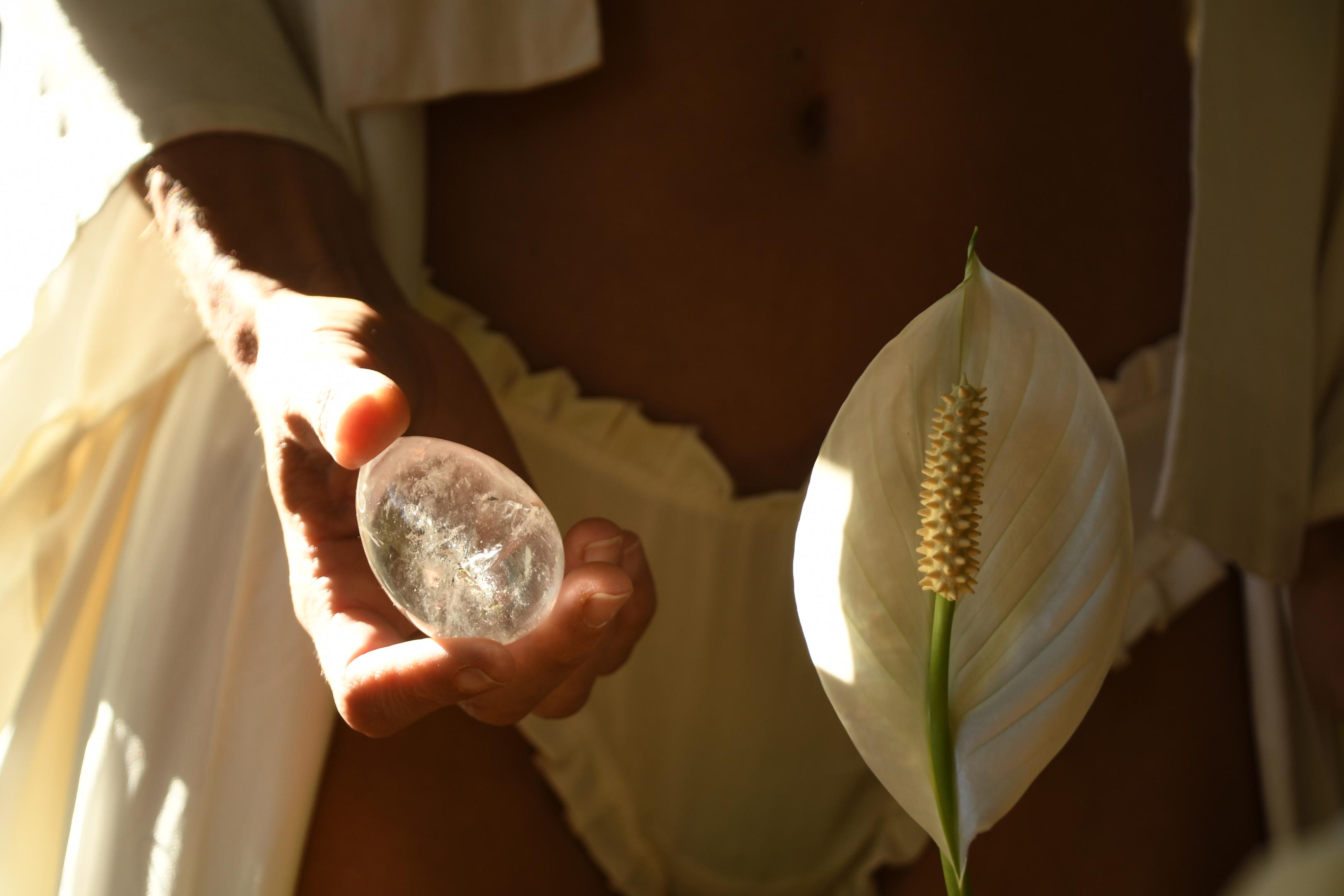
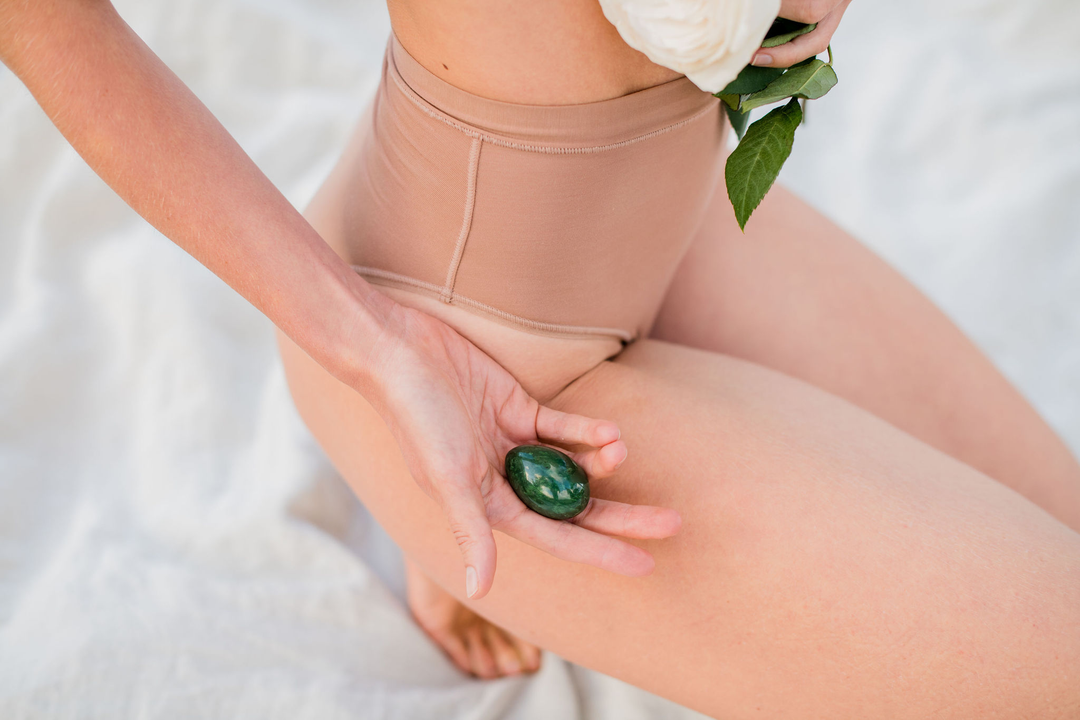
A yoni egg is a polished stone, carved smooth and worn inside the vagina. It gives the pelvic floor a gentle weight to engage around, and gives you a clear point of sensation to feel for. For many women, the pelvic floor is muscle you've never been taught to locate, let alone control, and the egg makes it findable.
Many sources claim that yoni eggs are a 5,000-year-old secret once practised by Chinese empresses and concubines in the royal palace. What brought the practice to the West is the Taoist teacher Mantak Chia who built it into his Healing Tao system in the late 1970s, drawing on older Chinese energy traditions. It then went fully mainstream in 2017, when Gwyneth Paltrow's wellness brand Goop promoted Jade eggs and sales surged worldwide.
Yoni eggs have moved firmly into pelvic wellness over the last decade, picked up by women who want a slower, more body-led alternative to clinical Kegel routines and are looking for something that builds strength and reconnects them to a part of the body they'd long stopped feeling.
This guide covers what a yoni egg actually is, and what it really does for your body.
Yoni Eggs vs. Kegel Balls: What's the Difference?
A kegel ball is a tool, and a yoni egg is a practice. Both ask the pelvic floor to engage around a weight, so on a purely muscular level they're doing similar work, but what each is for, and how you use it, pulls them in quite different directions.
Kegel balls were made with one clear goal in mind, which is strengthening the pelvic floor as efficiently as possible through kegel exercises. They're usually plastic or silicone with a weighted core that shifts as you move, nudging the muscles to grip and hold in response. They are effective for a weak pelvic floor and refreshingly straightforward, which is why physiotherapists so often reach for them. If strength is the only thing you're after, they do that job and do it well.
Jade yoni eggs approach the same muscles from a slower, more deliberate angle. The physical mechanism barely differs as the pelvic muscles still engage to hold and move the egg, but the egg is carved from semi-precious stone and used alongside breath, attention to sensation, and a set intention, and that surrounding ritual is really the point. The goal isn't only a stronger pelvic floor; it's also a felt reconnection with a part of the body most women have learned to tune out. For many, the stone carries a further layer of meaning through the crystal properties traditionally attributed to it.
Read: Pelvic Floor Training with a Kegels Egg: Does It Really Work?
What Do Vaginal Jade Eggs Actually Do?
Pelvic Floor Toning and Strengthening
Like any skeletal muscle, the pelvic floor responds to load, and the egg supplies it. Held inside the vagina, its weight gives the muscles something to grip, lift, and release against, turning an invisible internal action into trainable resistance work. Pelvic floor weakness is rarely just weakness; it's also a loss of coordination, because the levator ani is built from overlapping bundles running in different directions, layered for support rather than raw power. The egg trains both at once where the muscles get stronger, and you relearn how to recruit them in the right sequence. A drilled egg lets you add light weight to the string if you want more challenge, but the toning happens with or without the hole this, as the work comes from your engagement.
Bladder Control and Urinary Incontinence
Leaking when you laugh, sneeze, or lift is that protective reflex contraction arriving too late or being too weak to keep the urethra sealed under sudden pressure. Because the egg rebuilds both the strength and the timing of that response, consistent practice can meaningfully reduce or reverse stress incontinence.
Blood Flow, Lubrication, and Sensitivity
Engaging the pelvic floor draws fresh circulation into the vaginal tissues, and blood flow is what keeps that tissue plump, elastic, and naturally lubricated, which is the same reason any well-perfused tissue stays healthier than tissue that's gone quiet. More circulation means more sensation and more natural moisture, which is why women so often describe the change not as feeling stronger but as feeling more sensation in the area.
Pelvic Organ Prolapse Preventative Support
Prolapse happens when the muscular hammock slackens and the organs it supports begin to descend. Since that support depends entirely on the levator ani's constant tone, keeping those muscles strong and responsive is the body's own front-line defence.
Bowel Function
One part of the levator ani, the puborectalis, loops around the rectum and bends it into an angle that holds stool in until you choose to release it. When the pelvic floor weakens, that angle and its control falter, which is why poor pelvic tone can show up as bowel urgency, leakage, or sluggishness. Strengthening the floor restores the control, making bowel movements more reliable and comfortable.
Menopausal Support
As estrogen falls through menopause, vaginal tissue tends to thin and lose elasticity, and tissue that stops being used declines faster still. Regular practice works against the steady contraction keeps blood flowing to the area and the tissue active and engaged, which helps maintain hydration, comfort, and responsiveness through the transition.
PMS and Menstrual Cramps
Cramps are worsened by poor circulation and chronic clenching. A floor that's held in constant low-grade tension restricts blood flow and amplifies the pain. Learning to actively engage and fully release those muscles improves circulation and breaks the holding pattern. For many women that translates into easier cramps and less of the heavy, congested feeling that trails PMS.
Read: How to Use Yoni Eggs for Fertility Support
The Sexual and Emotional Benefits of Yoni Egg Practice
Awakening Sensitivity and Internal Awareness
Most women can't clearly feel the inside of their own vagina and the area registers as vague or a bit numb. Yoni egg practice changes that, because holding and moving the egg forces you to pay close attention to exactly where and how you're gripping. The result is a kind of internal map.
The more attention a body part receives, the more space the brain devotes to sensing it. So as you practise, the area becomes easier to feel abd more sensitive.
G-Spot Access and Orgasm
Orgasm is a series of rhythmic pelvic floor contractions, so when those muscles are stronger and more coordinated, orgasms tend to be more intense.
Once you can feel your internal landscape clearly, the G-spot on the front wall of the vagina becomes far easier to locate and stimulate. Some women find this combination of strength and awareness also makes squirting possible. It's not guaranteed, but it's exactly the foundation it depends on.
Libido, Energy, and Vitality
This benefit comes from the practice's Taoist roots, which view sexual energy as a kind of life force meant to keep moving through the body. Regular practice is believed to keep that energy circulating, which in turn feeds desire, creativity, and general vitality.
Clearing Sexual Blocks and Stagnant Energy
When sexuality is shamed, suppressed, or ignored for a long time, the body often stores that as tension and numbness in the pelvis. The area essentially shuts down. Returning slow, gentle, no-pressure attention to it can release that holding, which is why women so often describe the experience as something long-stuck finally starting to move and soften.
Reconnection, Safety, and Healing
The pelvis holds a lot, and for many women the practice becomes a way to rebuild a sense of safety and ownership in their own body. If you're working through sexual trauma, treat the yoni egg as one supportive piece within real support, and go entirely at your own pace.
The Tightness Myth & What Yoni Eggs Actually Do to Your Vagina
There's a story most women absorb, that a "good" vagina is a tight one. It's everywhere, in jokes, in porn, in the anxious way tightness gets equated with youth and desirability.
But a genuinely healthy pelvic floor isn't one that grips hardest. It's one that can contract with strength, and then fully let go. Persistent tightness isn't a sign of tone; more often its a sign of a muscle that has forgotten how to release.
The pelvic floor is deeply wired into the nervous system's threat response and it clenches and guards when the body feels unsafe or braced. Held long enough, that protective clench becomes the muscle's default setting. The clinical name is a hypertonic pelvic floor, and far from being desirable, it's behind a lot of real suffering and can cause pelvic pain, painful sex, difficulty with penetration, and vaginismus, where the muscles seize so tightly that entry becomes impossible. A "too tight" vagina is frequently stored stress or unprocessed trauma, locked into muscle.
This is exactly where yoni egg practice is misunderstood, and where it can go wrong. If you treat it as a tightening drill, gripping harder and longer to "train," you simply pile more tension onto a system that's likely already over-clenched. Doing this can make pain and tightness worse.
Done properly, the practice builds conscious engagement. The real skill is choice and the ability to feel these muscles clearly enough to contract when you want to and, just as importantly, to release when you want to. Forced practice produces more tension. Intention-led, breath-led practice produces actual strength and genuine release, because you're training the full range of the muscle, not just the squeeze.
Are Yoni Eggs Safe? Addressing the Controversy
In 2017, the wellness brand Goop promoted jade eggs with claims that they could balance hormones and regulate menstrual cycles, and the gynaecologist Dr. Jen Gunter responded with a now-famous public takedown. The story that stuck in the headlines was that Jade eggs are useless and potentially dangerous, and a later investigation of museum collections by Gunter and an Egyptologist found no evidence the practice was genuinely ancient, dubbing the royal-China origin a "modern marketing myth."
It's worth being fair about what the critics got right. Two things, mainly. First, the hormonal claims were nonsense, as a stone in the vagina cannot alter your estrogen or "balance your hormones," and any brand saying so is overclaiming. Second, the hygiene concern is legitimate as a porous, poorly-finished, or badly-cleaned stone really can harbour bacteria, and a foreign object left in too long can disturb the vaginal environment, which is a genuine risk factor for bacterial vaginosis. Those criticisms deserve to land.
But two things get lost in the noise. The first is that even Gunter, the loudest critic of all, wasn't condemning the practice itself. Her actual frustration was that the overclaiming made it harder for women to enjoy what she described as something that could be a beautiful support to their bodies. The objection was to the marketing, not the egg.
The second is the porosity question, which is more nuanced than "porous = dangerous." Stones vary enormously. A dense, untreated, well-polished stone that is cleaned properly is far less hospitable to bacteria than a cheap, dyed, or chemically-treated one, and treatments like bleaching are exactly what make a stone more porous and risky. This is why sourcing is very important in the safety question. Not all crystals are appropriate for internal use, and quality genuinely is the difference between a safe practice and an avoidable infection. Buy from sellers who can tell you precisely what the stone is, where it's from, and that it's untreated.
On toxic shock syndrome specifically the realistic risk is low. TSS is overwhelmingly associated with high-absorbency tampons worn during menstruation, where pooled blood and a shifted vaginal pH create the conditions the responsible bacteria need. A yoni egg isn't worn during your period, doesn't absorb or accumulate blood, and can be thoroughly cleaned between uses. The conditions that drive TSS simply aren't the conditions of normal yoni egg practice. Low risk isn't zero risk, but the headline scare was far out of proportion to a sensibly-used, well-cleaned stone.
Specific Safety Considerations
A few clear, practical rules keep the practice firmly on the safe side:
-
Don't start during pregnancy: Pregnancy changes the pelvic floor significantly, and it's not the time to introduce a new internal practice for the first time. If you're already an experienced practitioner, raise it with your care provider rather than assuming it's fine.
-
Don't wear it for long stretches: The pelvic floor isn't built to contract continuously, and leaving an egg in for hours leads to muscle fatigue and exactly the kind of unwanted, lingering tension this whole article warns against. Short, attentive sessions beat long passive ones every time.
-
Don't sleep with it in: Sleeping means hours of unmonitored wear with no awareness and no engagement.
-
Don't use it during sex or penetrative self-pleasure: A yoni egg is a hard, solid object. With the force and movement of penetration it can be pushed against the cervix or vaginal walls and cause real injury.
-
No, it won't get lost: The vagina is a closed canal that ends at the cervix, so an egg can't travel anywhere or disappear. A drilled egg with a removal string makes retrieval even simpler, especially while you're new to it.
-
Know when to see a professional first: Yoni egg practice is not the right starting point for certain conditions, and self-treating can make some of them worse. See a pelvic floor physical therapist before beginning if you have pelvic organ prolapse, diagnosed pelvic floor dysfunction, chronic pelvic pain, or a history of significant perineal trauma (including difficult childbirth). For a hypertonic, over-tight pelvic floor in particular, loading it with an egg is often the opposite of what's needed and a therapist can tell you whether the priority is strengthening or, just as likely, learning to release.
How to Choose Your Yoni Egg
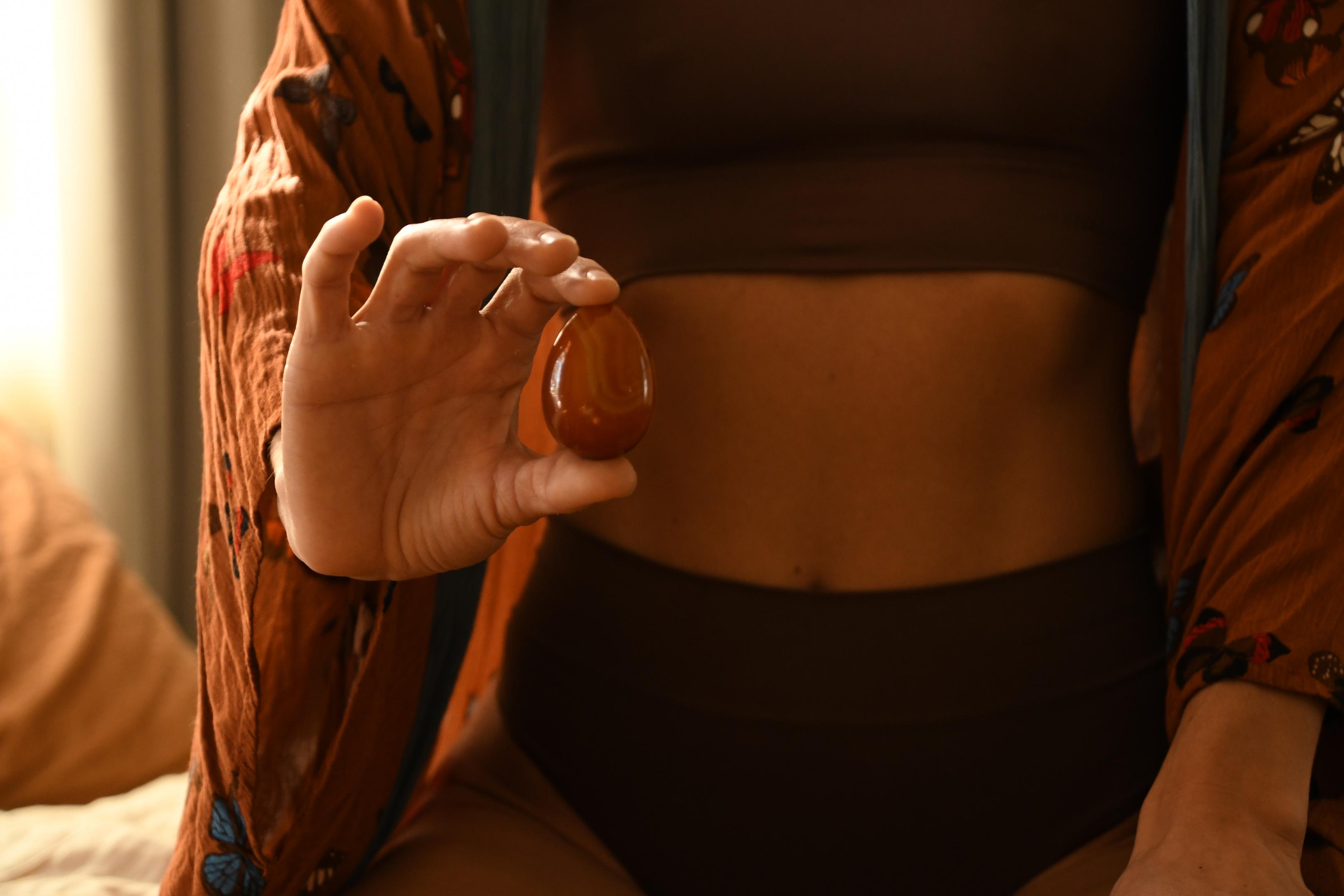
Choosing well comes down to three decisions, including the right size, drilled or undrilled, and which stone. None of them is complicated once you know what each one actually changes.
Sizing Guide
Yoni eggs come in three standard sizes, and the right one depends on your body and your experience. Bigger isn't more advanced, and starting too small can actually be harder to feel and hold.
|
Size |
Dimensions |
Best for |
|---|---|---|
|
Large |
50 × 38 mm |
Beginners, and especially anyone who has given birth vaginally. Easier to sense and to hold, because there's more for the muscles to register and grip. |
|
Medium |
43 × 30 mm |
The middle ground and a natural next step once a large egg feels easy to hold and control. |
|
Small |
35 × 25 mm |
More advanced practice, and for anyone working with tightness or tension. A smaller egg demands more precision and control to hold, which is why it suits experienced users, but it's also gentler for sensitive and small bodies. |
Most people are best starting with the large, despite the instinct to reach for small. A larger egg gives the pelvic floor more feedback, which makes it far easier to locate the muscles in the first place, and locating them is the whole beginning of the practice. You graduate down in size as your control improves.
Read: What Size Yoni Egg is Your Best Fit? A Complete Guide
Drilled vs. Undrilled
A drilled egg has a small hole through one end so you can thread a length of unwaxed cotton or dental floss through it. The practical benefit is easy, reassuring removal where you simply draw it out by the string, which makes it the more comfortable choice for most people, and especially for beginners. The string also lets you add light resistance by gently tensioning it while your pelvic floor holds the egg, giving the muscles a little more to work against.
An undrilled egg is solid stone, removed by bearing down gently with the pelvic floor.
The real strengthening comes from consciously engaging the pelvic floor around the egg and that happens whether the egg is drilled or not. For most people, especially starting out, drilled is the easier and more practical pick.
Choosing Your Stone
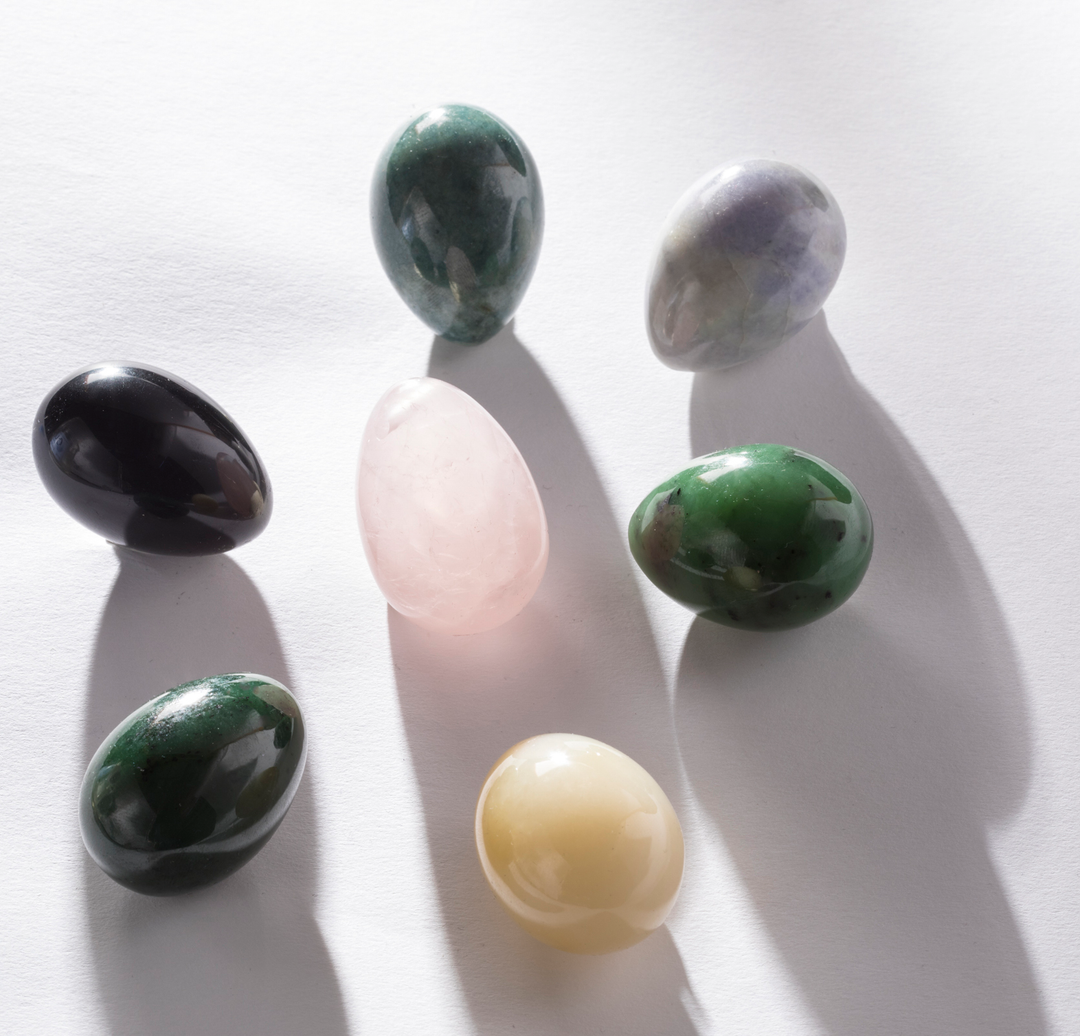
Different stones carry different traditional associations, and many women choose theirs partly on which qualities they want to invite into the practice. These energetic meanings are part of the ritual and intention of the practice.
|
|
Stone |
Traditionally associated with |
|---|---|---|
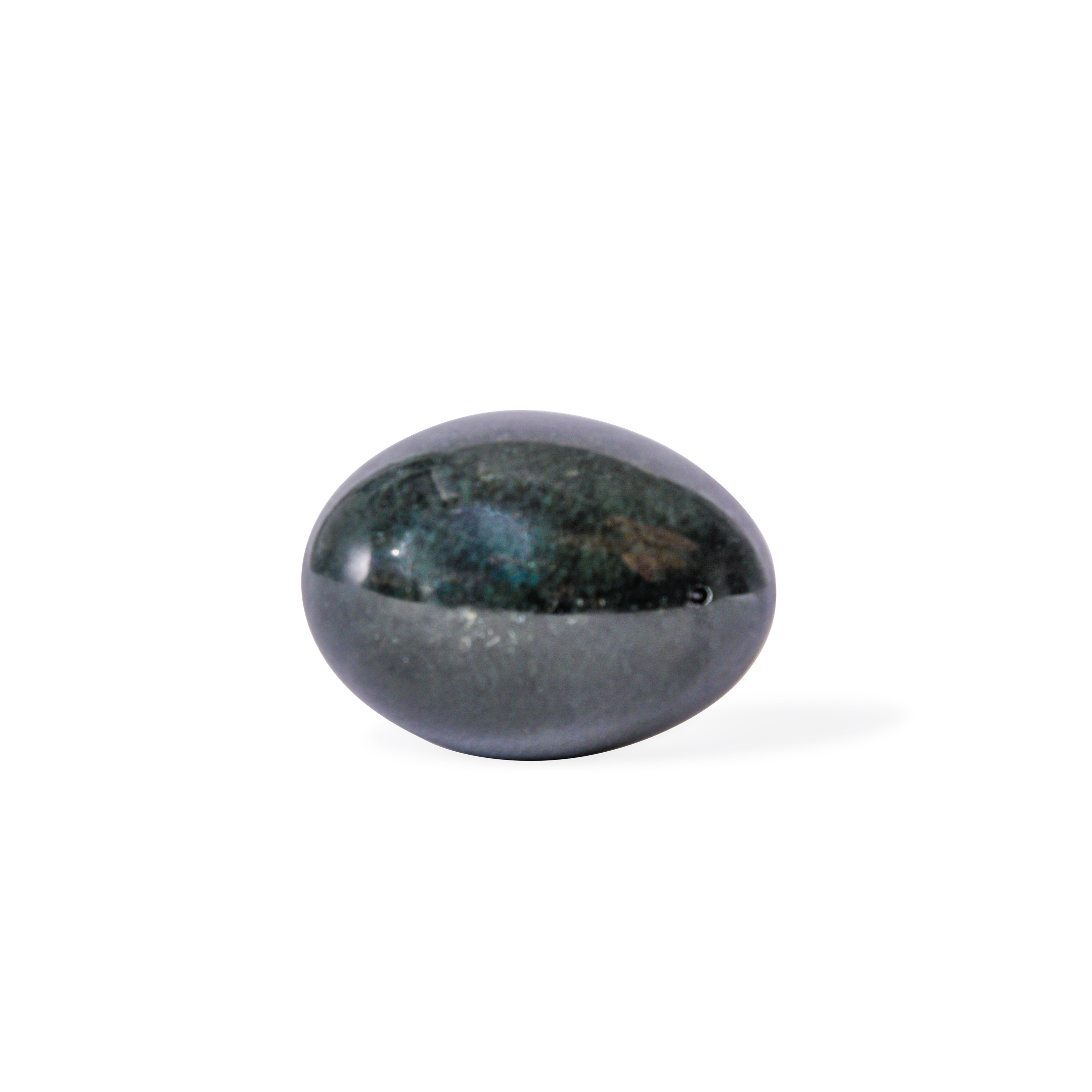 |
Nephrite Jade |
Vitality, longevity, heart-centred protection. This is the classic, original yoni egg stone |
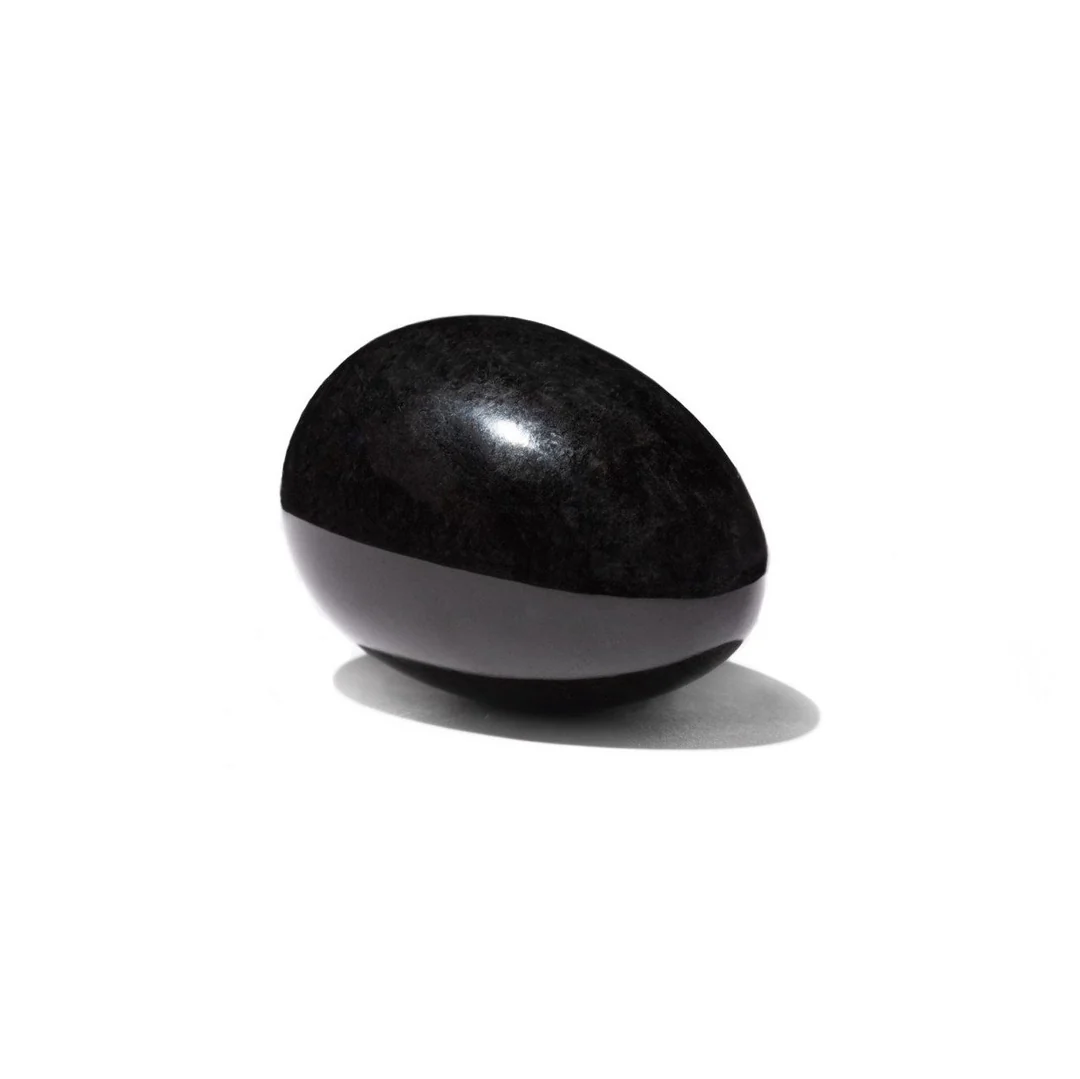 |
Black Nephrite Jade |
Grounding, protection, releasing fear and heavy energy |
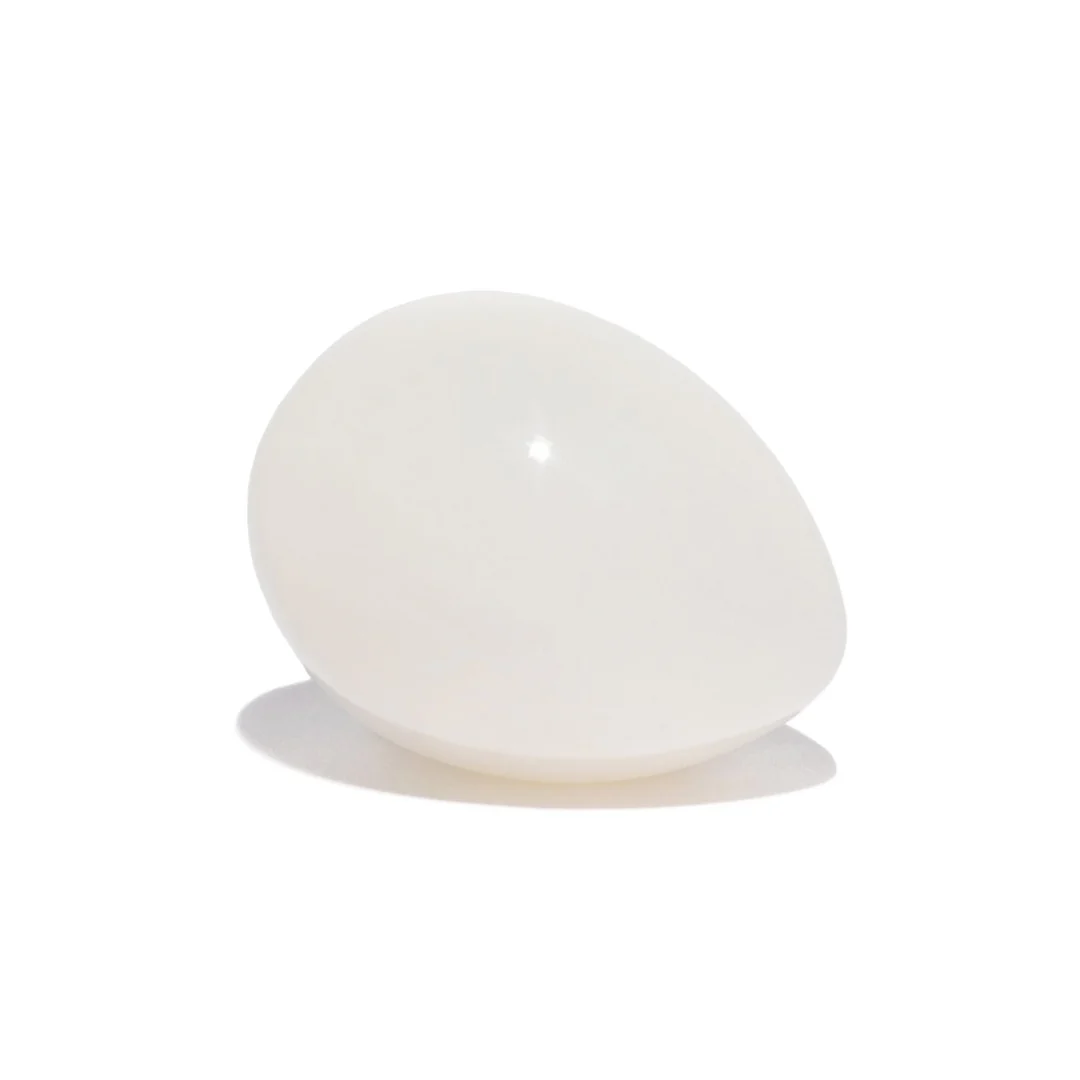 |
White Nephrite Jade |
Purity, calm, fresh starts and clarity |
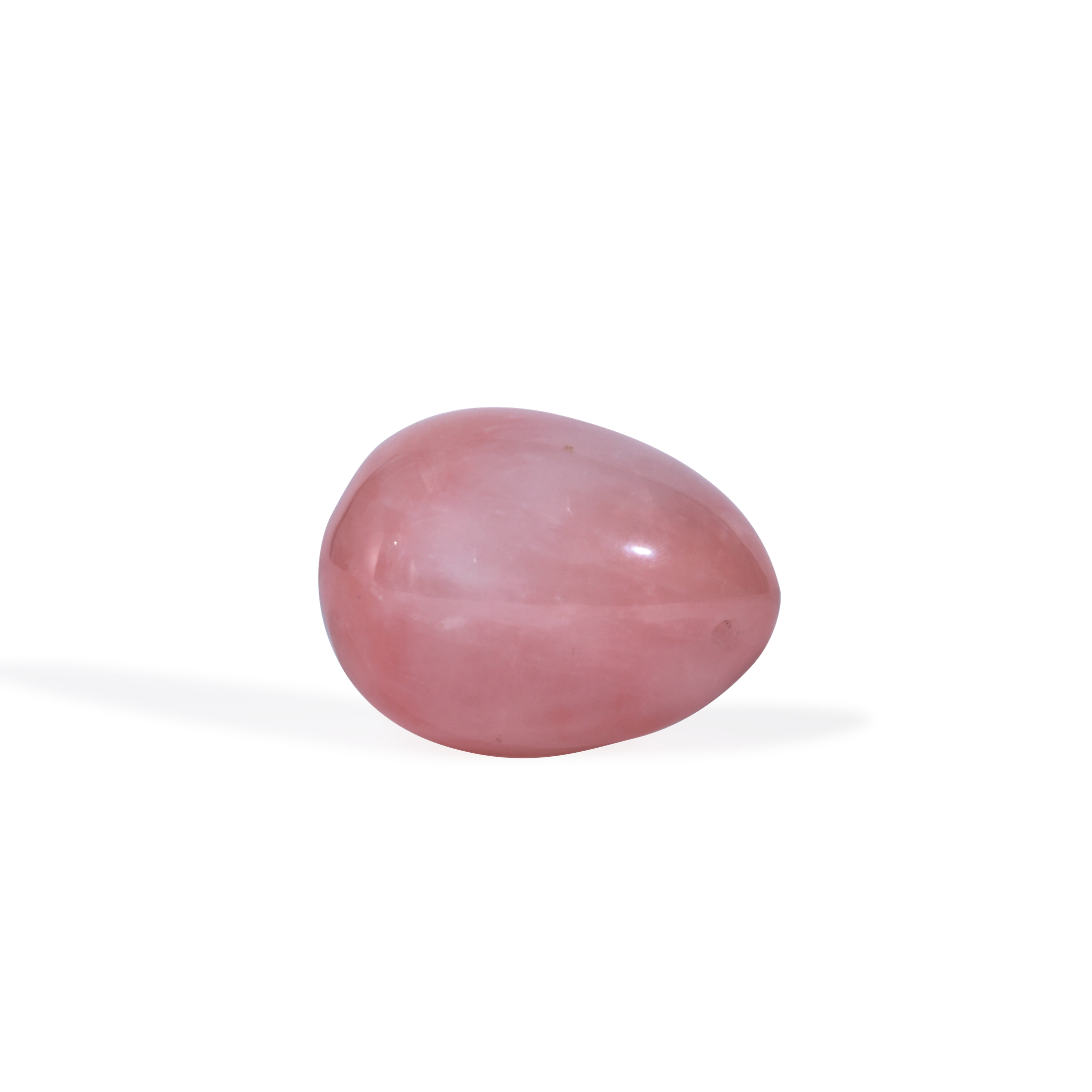 |
Rose Quartz |
Self-love, emotional healing, opening the heart. This os a favourite for tenderness and self-compassion |
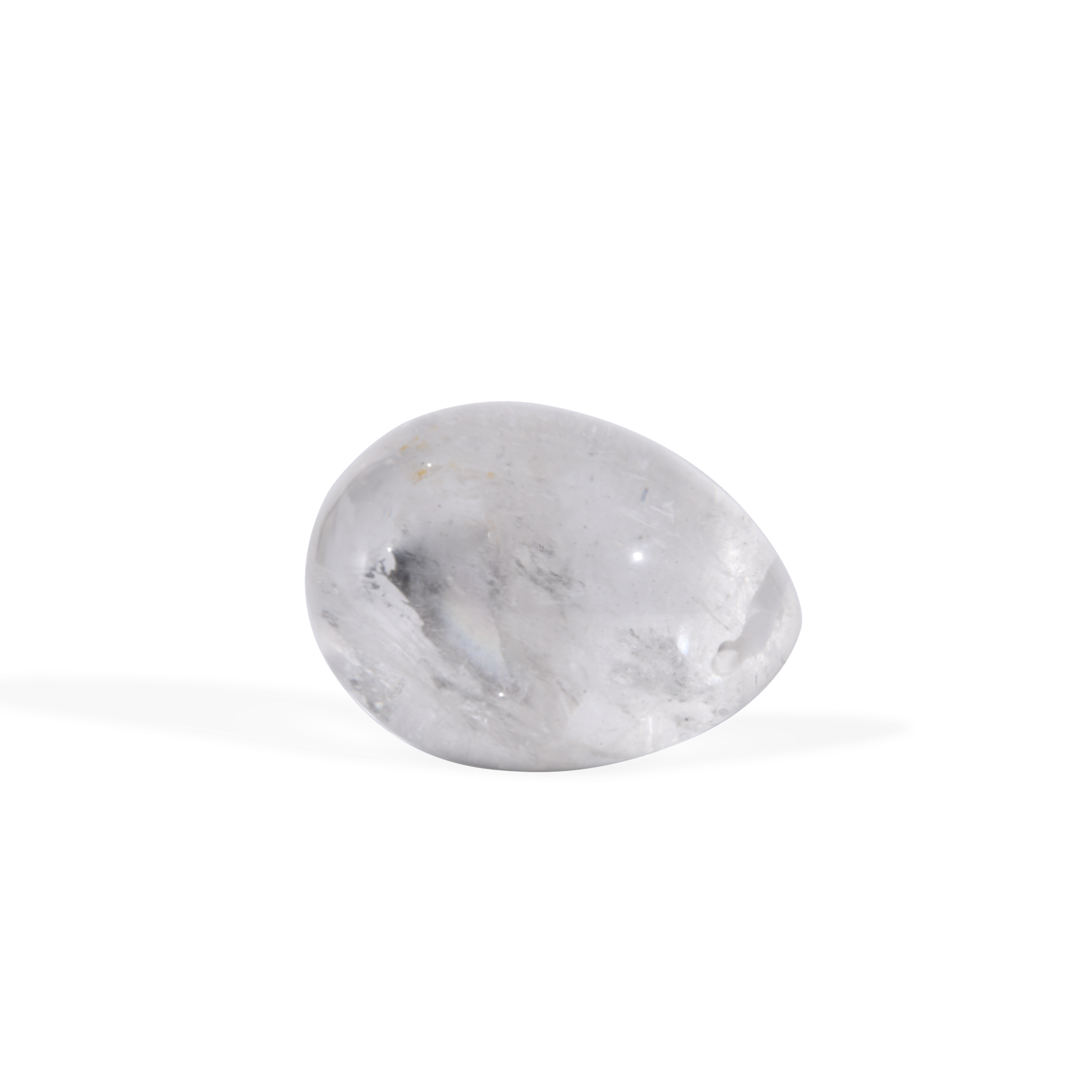 |
Clear Quartz |
Clarity, amplification, intention-setting and said to magnify whatever you bring to the practice |
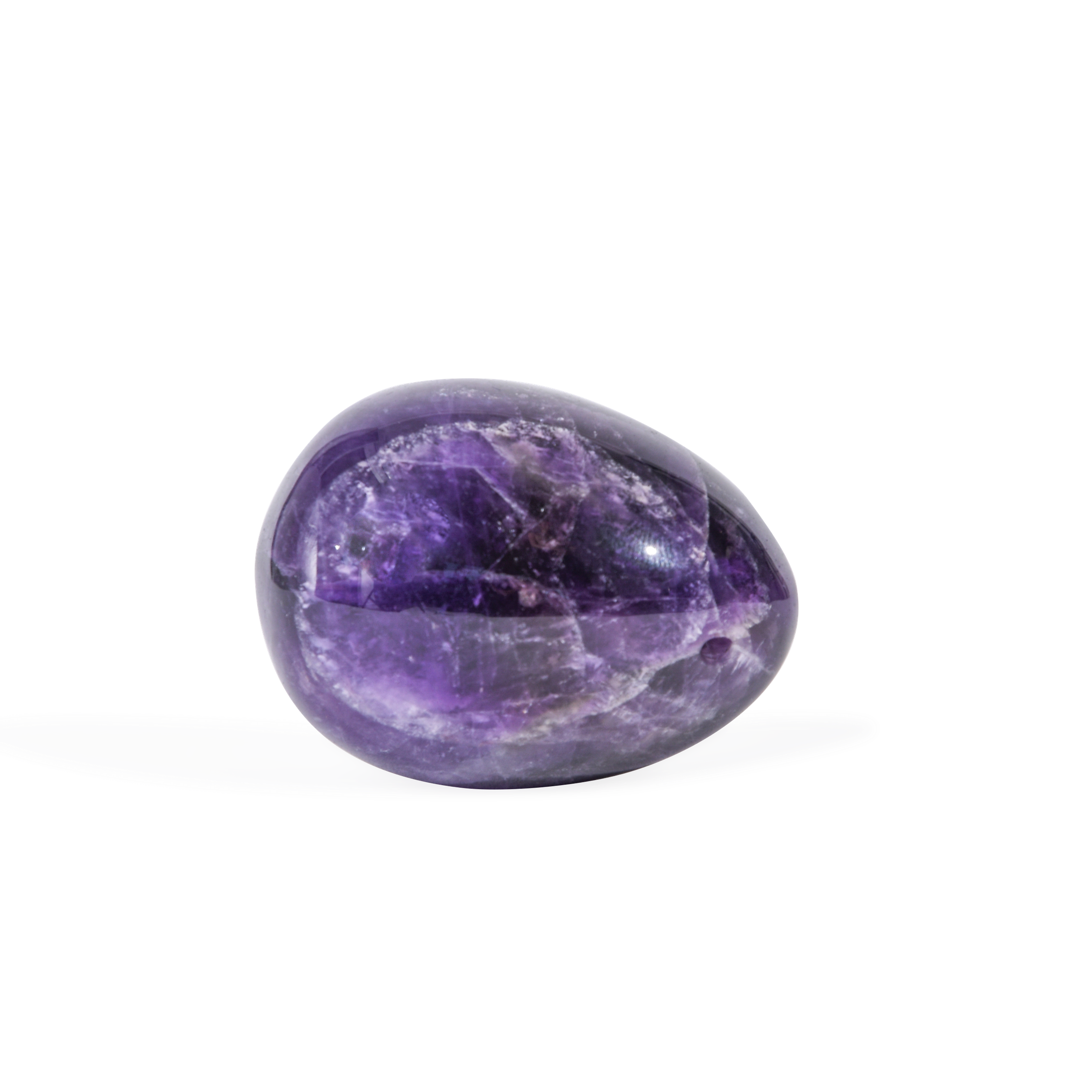 |
Amethyst |
Calm, intuition, soothing an overactive mind; stress release |
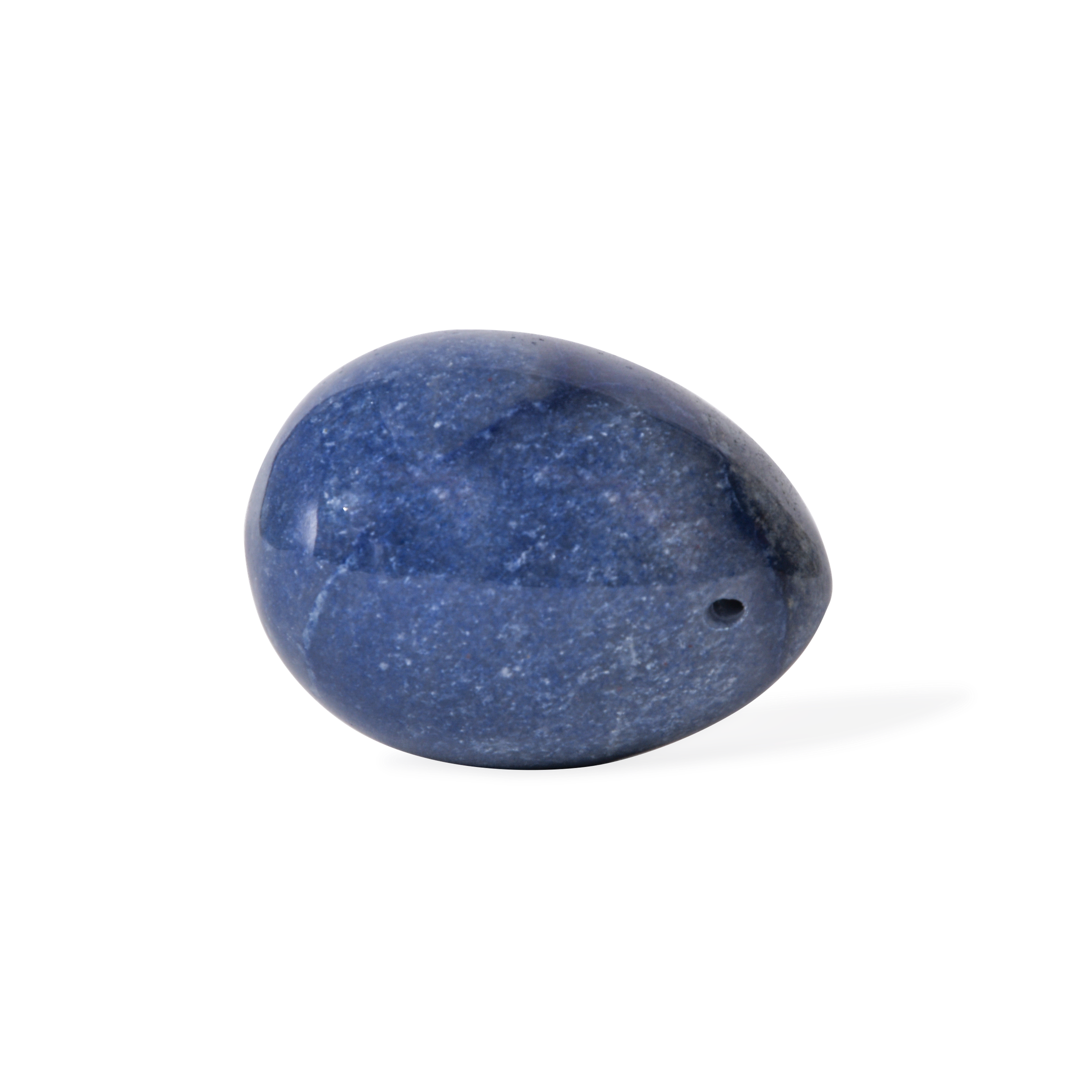 |
Blue Quartz |
Serenity, communication, easing tension and anxiety |
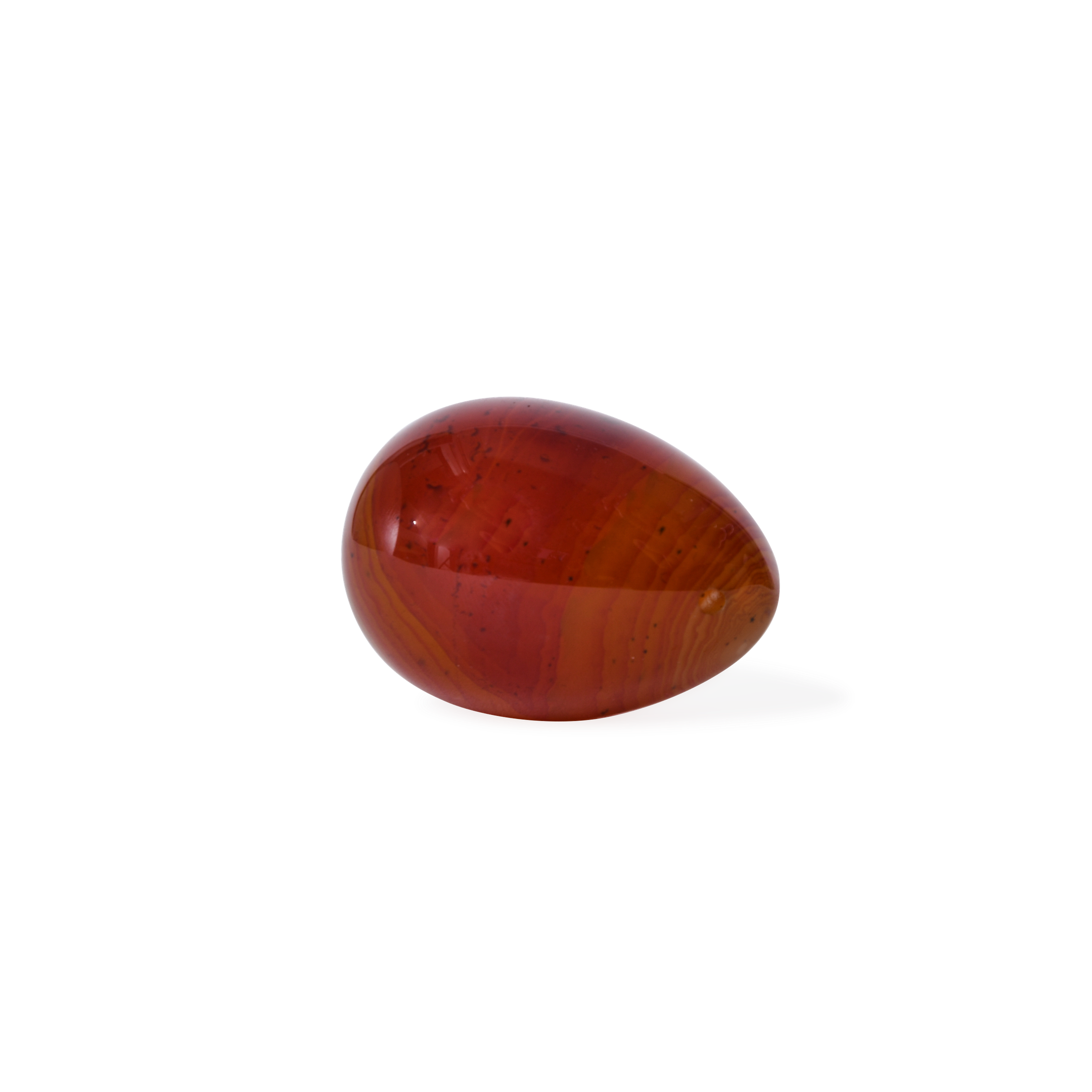 |
Red Carnelian |
Vitality, sensuality, creative and sexual energy, confidence |
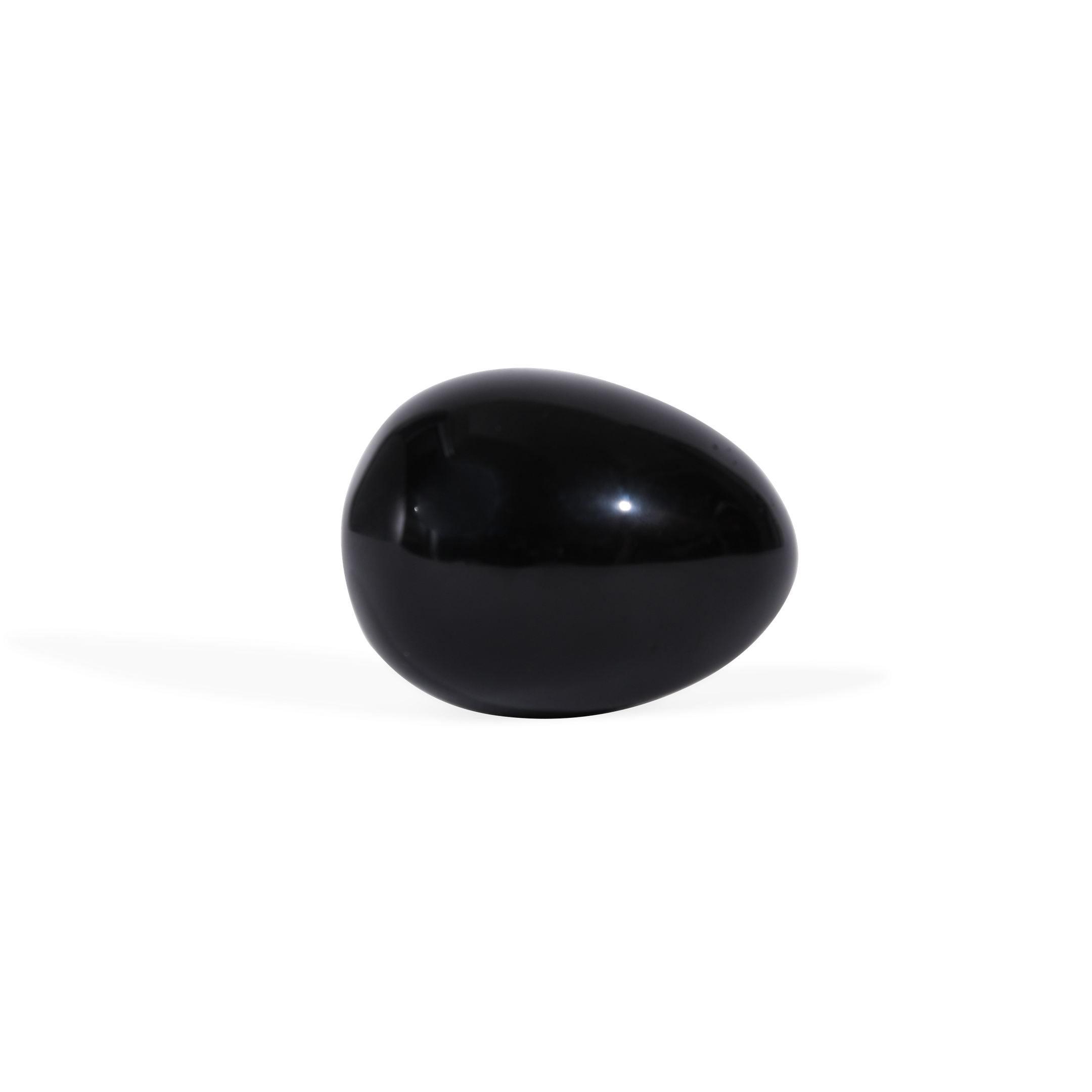 |
Black Obsidian |
Deep release, shadow work, clearing trauma and stagnant energy. Can be intense and confronting for some |
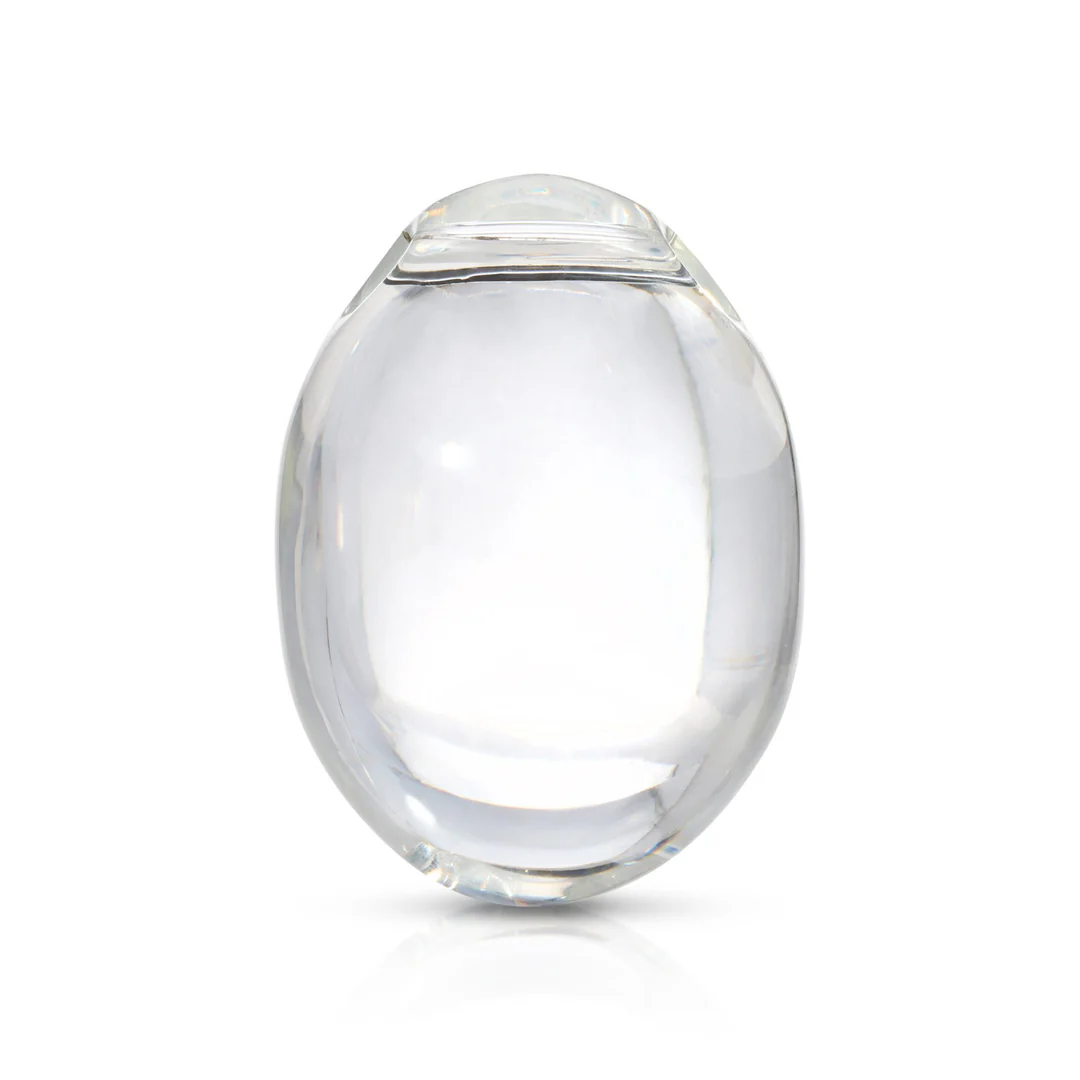 |
Clear Glass |
A neutral choice |
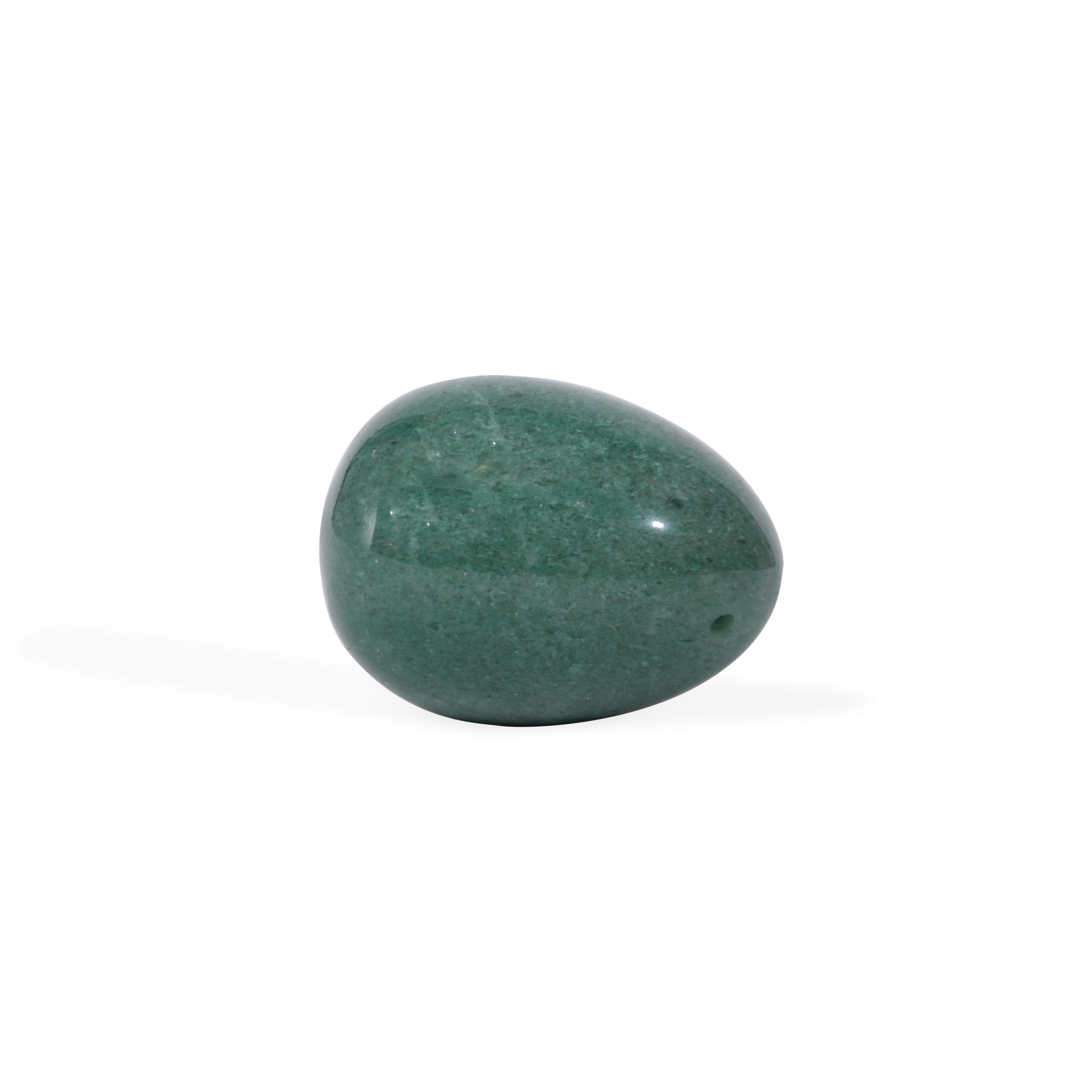 |
Indian Jade (Aventurine) |
Luck, opportunity, soothing the heart, emotional balance |
How to Use a Yoni Egg
Before You Begin
-
Clean the egg: Wash it with mild, unscented soap and warm water before and after every use, paying attention to any grooves or the drilled hole. Never use harsh chemicals, bleach, or strong disinfectants; they're hard on both the stone and your vaginal tissue.
-
Inspect it: Give the egg a quick look and feel for any chips, cracks, or rough edges, especially around the drill hole. A damaged stone shouldn't go inside the body.
-
Thread the string (drilled eggs): Pass a length of unwaxed cotton thread or plain dental floss through the hole and knot it securely, leaving a tail long enough to grasp easily. You can also try our Organic Silk Yoni Egg string which can be reused and cleaned with your egg.
-
Set an intention: Naming what you're here for shifts the practice from a mechanical exercise into a focused one, and that focus is what trains the mind-body link the egg depends on.
-
Warm the egg: Cool stone against warm tissue is a small shock that makes the body brace. Hold the egg in your hands or against your belly for a minute or two until it reaches body temperature and insertion feels smooth and welcoming.
Basic Practice Sequence
-
Create the space: Choose somewhere private, warm, and unhurried, where you won't be interrupted. The pelvic floor only releases when the body feels safe, so the setting genuinely shapes what's possible.
-
Breathe into the pelvic bowl: Before inserting anything, take several slow breaths directed downward, imagining each one softening and opening the whole pelvic area. This signals safety and naturally relaxes the muscles, making insertion easy and comfortable. A little gentle self-massage of the belly or vulva can help the body warm and arrive.
-
Insert slowly, wide end first: Lying down or in a gentle squat, and using a little natural water-based lubricant if you'd like, guide the egg in wide end first, slowly and without force. There's no need to push it deep, just past the entrance is enough, and your body will hold it in place. If anything feels tense, pause and breathe rather than forcing it.
-
Start with passive awareness: For your first sessions, simply rest with the egg inside and feel it. Notice its weight, its presence, where you can and can't sense it, and breathe toward it.
-
Move to active engagement: When you're ready, gently grip, lift, and release the egg with your pelvic floor. Squeeze on an exhale, soften fully on an inhale. The release is as important as the squeeze. With a drilled egg you can add light tension on the string as you hold for a little extra resistance.
-
Keep active practice short: Limit active engagement to no more than around 20 minutes. The pelvic floor fatigues like any muscle, and overdoing it produces tension.
-
Remove without panic: To remove, return to lying down or a squat, as squatting shortens the vaginal canal and makes it easier. For a drilled egg, gently draw the string downward as you bear down. For an undrilled egg, bear down gently as if having a bowel movement and let gravity and your natural secretions do most of the work; you can also scoop it out with a clean finger. If it doesn't come straight away, don't panic, it genuinely cannot get lost, since the vagina is a closed canal ending at the cervix. Relax, breathe, and try again in a moment.
-
Clean and store: Wash the egg again as in step one, dry it, and store it somewhere clean and protected until next time.
Read: How To Know if Your Certified Yoni Egg Is Safe & Ethically Sourced
FAQ
Both kegel balls and yoni eggs train the same pelvic floor muscles through resistance and awareness, so they overlap in what they do for strength and continence. The difference is what they're made of and how they're used. Kegel balls are typically weighted plastic or silicone, designed purely as a pelvic floor training device. Yoni eggs are egg-shaped gemstones and semi-porous natural stone rather than manufactured silicone. They are used as a slower, intention-led practice that pairs the physical work with breath and body awareness. Many women drawn to yoni eggs also value the healing crystal tradition and energetic qualities attributed to each stone.
Active practice should stay under about 20 minutes, because the pelvic floor fatigues like any muscle, and leaving an egg in for long periods causes exactly the pelvic floor tension you're trying to release rather than relieve. As a beginner you might start with just a few minutes and build up gradually from there. Don't sleep with it in, and don't wear it for hours around the house. Short, attentive sessions a few times a week do far more. And always remove it before sleep, sex, or your period.
The popular idea that a "tighter" vagina is healthier is largely a myth. A constantly tight, or hypertonic, pelvic floor is often a problem rather than a goal as it's linked to pain, difficulty with penetration, and conditions like vaginismus, and it usually reflects stored stress or tension rather than real strength. What yoni eggs actually build is tone and control through strong, responsive vaginal muscles that can both contract firmly and fully relax on demand. That improved control often does heighten sensation and grip during sex, which many women experience as feeling "tighter," but the real win is a pelvic floor that's strong and able to soften and open.
There are a few cons of yoni eggs worth knowing. The first is that the benefits take consistency. Yoni eggs work, but not overnight, and results come from regular, patient practice rather than a single session. The second is that hygiene and sourcing genuinely matter because natural stone is semi-porous, and a cheap, dyed, treated, or poorly-cleaned egg can become a route to a vaginal infection or upset your pH balance, so buying well-finished, untreated stone from a transparent seller and cleaning it properly before and after every use is non-negotiable. It's also worth inspecting the egg for chips and rough spots before each use, since a damaged stone shouldn't go inside the body.
It's easy to overdo, too. Wearing it too long or gripping too hard adds tension, so more is never better here. And it's important to remember that a yoni egg is not a medical treatment. It supports pelvic and sexual health but doesn't replace a healthcare provider. If you have a prolapse, diagnosed pelvic floor dysfunction, chronic pelvic pain, urinary or bowel incontinence that concerns you, or a history of significant birth trauma, see a pelvic floor physiotherapist before starting, because for some conditions unsupervised use can make things worse and a professional may recommend a different approach entirely.



Leave a comment